
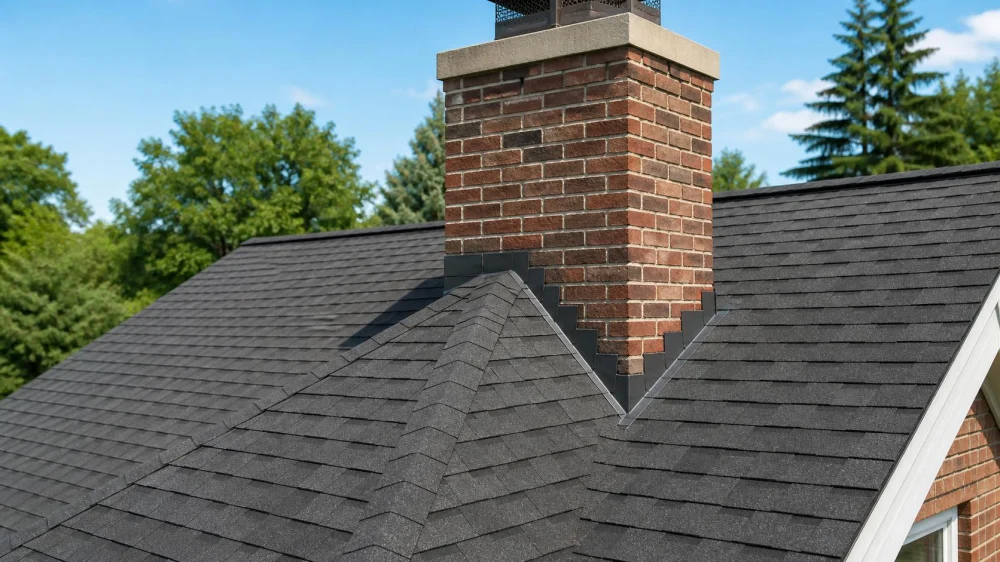
Chimney Cricket and Flashing: Plan Water Diversion
Table of contents
Quick answer
A chimney cricket is a small peaked structure on the uphill side of a chimney that diverts water and debris around the obstruction. Whether one is required or advisable depends on chimney width, roof slope, roofing system, climate, and local rules. Its framing, underlayment, roof covering, step flashing, and counterflashing must work as one drainage assembly.
Lance Roofing & Siding Inc. / lance roofing and siding
6903 Dayton Springfield Rd, Enon, OH 45323, USA
What the detail does
A wide chimney interrupts water flowing down the roof. Without a suitable diversion detail, water, leaves, snow, and ice can collect at the uphill joint. A cricket helps split that flow, but it cannot compensate for failed masonry, incorrect flashing, blocked drainage, or an unsuitable roof slope.
From the ground or attic, record staining, debris buildup, loose metal, cracked mortar, or repeated repair sealant. Do not infer the leak source from an interior stain alone; water can travel before it becomes visible.

Rapid Response Roofing / rapid response roofing
East GreenvilleMontgomery CountyPennsylvania
408 State St, East Greenville, PA 18041, USA
Questions for the roofing scope
- Does the applicable code or manufacturer detail call for a cricket?
- Who designs and builds its framing and deck?
- How will underlayment and ice protection integrate with the roof?
- Will step flashing and counterflashing be separate, correctly lapped components?
- Who handles masonry cuts, mortar joints, and chimney repairs?
- How will the work be photographed before it is covered?
- How will drainage and the final repair be inspected?
- Coordinate the roofer and masonry professional before tear-off.
- Confirm dimensions and materials in the written change scope.
- Inspect concealed decking and framing once exposed.
- Install layers in water-shedding order using compatible materials.
- Complete a final visual check and retain close-up photos.
Limits and warning signs
Do not walk on a roof to inspect a chimney. Masonry can be unstable, and roof work requires fall protection. Active leaking, loose brick, a leaning chimney, extensive decay, or suspected structural movement needs prompt professional assessment. Sealant smeared over joints is not proof of a durable flashing repair.
Frequently asked questions
Is a cricket the same as flashing?
No. The cricket changes water flow; flashing and underlayment create the weather-resistant transitions. They must be designed together.
Can a cricket be added during reroofing?
Often that is the practical time because the surrounding roof is open, but framing, masonry, code, and warranty requirements still need review.
Who should repair the chimney?
The roofer handles the roof system, while masonry defects may require a qualified mason. Put the boundary and sequence in writing.
Sources and evidence
Consult current local building requirements, the selected roofing manufacturer’s published details, recognized roofing practice, and masonry guidance applicable to the chimney. Site conditions determine the final design.
Next steps
Ask for an annotated photo or drawing that shows the cricket, underlayment, roof covering, step flashing, counterflashing, and responsibility for masonry. Keep the approved detail and installation photos with the roof warranty.


 Towne Roofing5.0 (8 reviews)
 Gresham Roofing4.0 (121 reviews)
 Tommie B. Butts, Jr. Enterprises, Inc.5.0 (3 reviews)
 Allied Roofing & Sheet Metal3.0 (29 reviews)
 Urban Peak Roofing Solutions Co.0.0 (0 reviews)
 Arreguin Inc5.0 (1 reviews)
 Skylight Leaks: Causes, Repairs, and Prevention | Pro Found Roofing
 Roof Financing No Credit Check Options Explained for Homeowners
 How Long Does It Take to Repair a Roof Leak?
 How to Identify and Repair Damage from an Animal That Has Died in the Attic
 The Best Time to Replace Your Roof: Spring and Fall Weather Windows
 How to Install a Standing Seam Metal Roof with Hidden Fasteners