
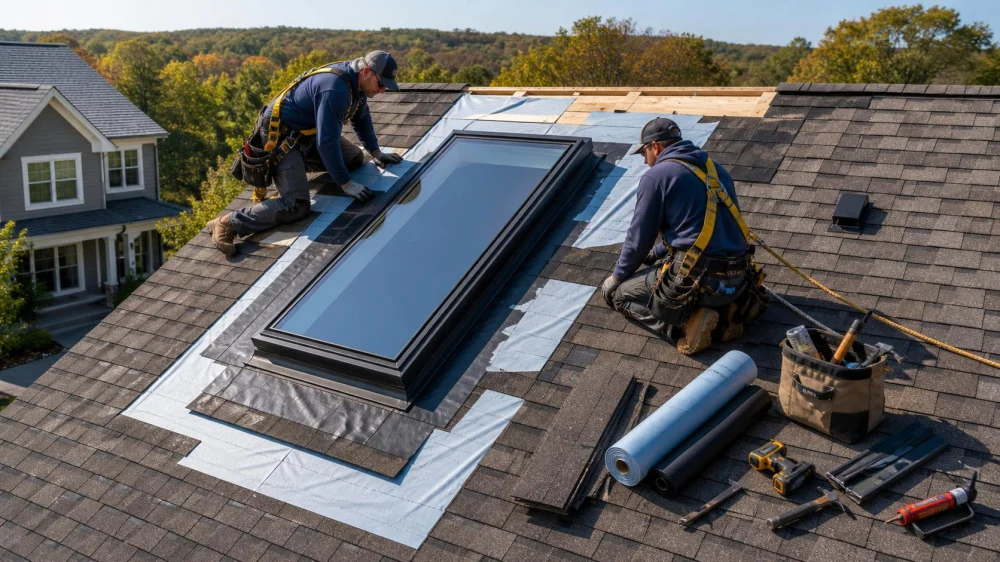
Skylight Replacement During Reroofing: Decide Before Tear-Off
On this page
Quick answer
Before reroofing begins, identify every skylight's manufacturer, model, age, glazing condition, leak history, curb or deck-mounted design, and compatibility with the proposed roof system. Compare reuse, reflashing, and replacement in writing. Decide before tear-off so the opening, underlayment, flashing kit, interior protection, permits, warranty, and weather plan are coordinated instead of improvised.
Victors Home Solutions / victors roofing
2722 E Michigan Ave suite 239, Lansing, MI 48912, USA
Why it matters
A skylight interrupts the roof drainage plane. Reroofing creates the best access to inspect its mounting and flashing, but it also creates schedule and water-entry risk if the decision is deferred.
This United States guide applies generally to residential reroofing. Manufacturer instructions, local codes, energy requirements, roof slope, product approvals, and contractor licensing differ by jurisdiction and roof system.

Rapid Response Roofing / rapid response roofing
East GreenvilleMontgomery CountyPennsylvania
408 State St, East Greenville, PA 18041, USA
Practical checklist
- Record manufacturer labels, dimensions, approximate age, operating type, glazing, shades, and leak or condensation history.
- Ask whether the unit is curb-mounted or deck-mounted and which flashing kit matches the roof material and slope.
- Compare written prices for reuse and reflashing, full replacement, interior finish repair, disposal, and hidden damage.
- Confirm the roofer and skylight installer roles, permit responsibility, and who protects the opening overnight.
- Review product, flashing, glass, workmanship, and roof-system warranty terms together.
- Protect rooms and belongings below against dust, falling debris, and weather.
- Photograph the opening, deck, underlayment, flashing sequence, and completed interior and exterior work.
Step-by-step plan
- Inventory the existing unit from safe interior and ground locations. Do not step onto the roof or lean through the opening.
- Ask for condition findings. Cracked glazing, failed seals, damaged frames, obsolete parts, recurring leaks, or an unknown installation may shift the decision toward replacement.
- Check system compatibility. The proposed roofing, slope, curb height, underlayment, ice barrier, fasteners, and flashing kit must work together under current instructions.
- Define the full scope. Include framing repairs, deck changes, insulation, air sealing, wiring, drywall, paint, shades, screens, and debris disposal where applicable.
- Set a weather and temporary-cover plan. The team should know when the opening will be exposed, how materials stay dry, and what happens if work stops.
- Inspect before concealment. Request photos of sound decking, water-control layers, head and sill details, side flashing, and any manufacturer-required clearances.
- Complete operational and water-management checks. Verify opening hardware, interior finish, labels, documentation, and exterior drainage without unsafe hose testing.
Keep model and serial information, proposals, product approvals, permits, manufacturer instructions, flashing-kit details, photos, invoices, warranty registrations, and approved change orders.
Limits and warning signs
A stain near a skylight can originate from roofing, flashing, condensation, plumbing, or another path. Reusing an old unit may preserve near-term cost but can complicate warranty and future replacement. Replacement can reveal framing, moisture, insulation, or finish work not visible in the estimate.
Stop work for an unstable opening, significant rot, mould, damaged wiring, structural alteration, active severe weather, or a product that cannot meet the roof slope and code requirements. Bring in qualified structural, electrical, environmental, or restoration help as needed.
Frequently asked questions
Must every skylight be replaced with the roof?
No. The decision depends on condition, age, parts, compatibility, leak history, cost, and warranty. Require a documented recommendation.
Is new flashing enough?
Only when the skylight and installation are suitable and the correct approved flashing system can be installed to current instructions.
Who repairs the ceiling below?
Define it in the contract. Roofing, skylight, insulation, electrical, drywall, and painting work may involve different trades.
Should I test with a garden hose?
Do not improvise a high-pressure test. Ask the installer about the manufacturer's inspection or controlled test procedure.
Sources and evidence
The guide follows common skylight and roofing practice: identify the exact unit, use roof- and slope-compatible flashing, coordinate water-control layers, plan weather protection, document concealed work, and preserve manufacturer instructions and warranties.
Conclusion and next steps
Inventory each skylight and ask for a written reuse-versus-replacement recommendation before signing the reroofing scope. Confirm compatible products, interior work, weather protection, inspection photos, and warranty responsibility before tear-off.


 Austin All Roof - Pflugerville4.0 (14 reviews)
 JJ Contracting Roofing Co5.0 (1 reviews)
 The Roofing Company3.0 (23 reviews)
 Farha Roofing4.0 (172 reviews)
 INALFA ROOF SYSTEMS0.0 (0 reviews)
 Eagles Roofing and Reconstruction LLC4.0 (4 reviews)
 How to Notify Neighbours Before Roofing Work Starts
 The Environmental Impact of Your Roofing Choices
 What to Do If Your Roof Starts Leaking During a Storm
 A Homeowner's Guide to Filing an Insurance Claim for Roof Damage Successfully
 Everything You Need to Know About Insurance Claims for Roof Damage
 The Pros and Cons of a M-Shaped Roof Design for Larger Homes