
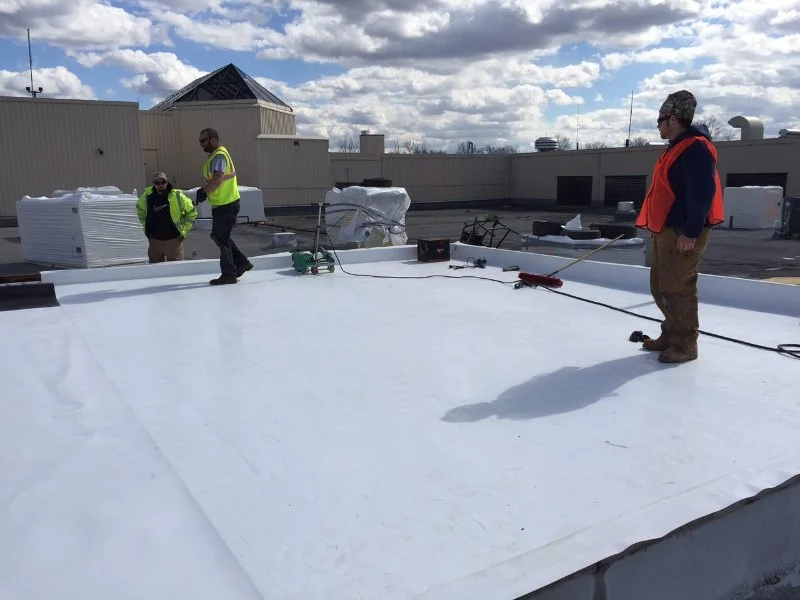
- Understanding-Roofing-Membranes-for-Flat-Roofs
- EPDM-Roofing-Membranes-Features-and-Benefits
- TPO-Roofing-Membranes-Performance-and-Uses
- PVC-Roofing-Membranes-Durability-and-Advantages
- Choosing-the-Right-Membrane-for-Your-Flat-Roof
Understanding Roofing Membranes for Flat Roofs
If you own a building with a low-slope or flat roof, understanding What is a Roofing Membrane? A Guide to EPDM, TPO, and PVC for Flat Roofs can help you make smarter decisions about installation and repairs. Unlike traditional shingles used on pitched roofs, flat roofs depend on continuous waterproof layers called roofing membranes to protect the structure from moisture damage.
A roofing membrane is a flexible sheet material designed to create a watertight barrier across the entire roof surface. These membranes are typically installed in large sections with sealed seams, preventing water from penetrating into the building. Because flat roofs do not shed water as quickly as sloped roofs, membrane performance plays a critical role in long-term durability.
1. Why Flat Roofs Depend on Membranes
Flat roofing systems are exposed to standing water, temperature swings, and UV radiation. A properly installed membrane provides consistent protection where traditional roofing materials might fail.
1.1 Continuous Waterproof Protection
Membranes cover the entire roof surface without the overlapping gaps found in shingles. This reduces the number of potential leak points and improves reliability during heavy rain.
1.2 Flexibility in Changing Temperatures
Roofing membranes expand and contract with seasonal temperature changes. This flexibility helps prevent cracks that can develop in more rigid roofing systems.
2. Where Roofing Membranes Are Commonly Used
Membrane systems are widely used on residential additions, garages, apartment buildings, and commercial structures.
2.1 Residential Flat Roof Areas
Homeowners often use membranes on porches, modern-style homes, and rooftop decks where traditional shingles are impractical.
2.2 Commercial Buildings
Large retail stores and office buildings rely heavily on membrane systems because they provide cost-effective waterproofing across wide roof surfaces.
Many property owners researching membrane systems consult Pro Found Roofing to compare materials and determine which system fits their building conditions best.
EPDM Roofing Membranes Features and Benefits
EPDM (ethylene propylene diene monomer) is one of the most established flat-roof membrane materials. Often called "rubber roofing," EPDM membranes have been used for decades and remain popular because of their reliability.
3. Material Characteristics
EPDM membranes are made from synthetic rubber compounds that provide strong resistance to weather exposure.
3.1 Long-Term Durability
Properly installed EPDM roofs often last 20–30 years. The material resists cracking even in regions with freezing winters and hot summers.
3.2 Excellent Flexibility
EPDM performs well on roofs that experience structural movement or temperature changes.
4. Advantages and Limitations
While EPDM is reliable, it has certain trade-offs.
4.1 Cost Advantages
EPDM is usually one of the most affordable membrane options, making it attractive for large surfaces.
4.2 Appearance Considerations
Traditional EPDM is black, which absorbs heat. In warm climates this can increase cooling costs compared to reflective membranes.
5. Real-World Example
A small business owner replaced an aging built-up roof with EPDM after repeated leaks. The single-piece membrane eliminated seam failures that had plagued the previous system, reducing maintenance calls significantly over the next decade.
TPO Roofing Membranes Performance and Uses
TPO (thermoplastic polyolefin) has become one of the fastest-growing roofing membrane materials in the United States. It combines durability with energy efficiency.
6. Reflective Energy Efficiency
TPO membranes are typically white or light-colored.
6.1 Reduced Heat Absorption
The reflective surface helps reduce roof temperatures and cooling costs, particularly in sunny climates.
6.2 Environmental Benefits
Lower cooling demand can reduce overall energy consumption.
7. Installation Characteristics
TPO seams are heat-welded rather than glued.
7.1 Strong Seam Strength
Heat-welded seams create consistent bonds that resist water intrusion.
7.2 Faster Installation
Professional crews can often install TPO efficiently on large roof areas.
8. Best Applications
TPO works well for both homes and commercial buildings.
8.1 Warm Climate Homes
Reflective membranes help keep indoor temperatures more stable.
8.2 Energy-Conscious Buildings
TPO is often chosen for buildings seeking improved efficiency.
PVC Roofing Membranes Durability and Advantages
PVC (polyvinyl chloride) membranes are known for exceptional strength and chemical resistance. They are often selected for demanding environments.
9. High Strength and Resistance
PVC membranes contain reinforcement layers that improve durability.
9.1 Chemical Resistance
PVC performs well in areas exposed to oils, grease, or industrial pollutants.
9.2 Puncture Resistance
Reinforced PVC membranes are less likely to tear during installation or maintenance work.
10. Long-Term Reliability
PVC membranes can last decades when maintained properly.
10.1 Consistent Waterproofing
Heat-welded seams help maintain watertight performance.
10.2 Minimal Maintenance
PVC roofs typically require fewer repairs than older roofing systems.
11. Typical Use Cases
PVC is often chosen for specialized applications.
11.1 Restaurants and Commercial Kitchens
Grease exhaust systems can degrade other roofing materials, but PVC resists chemical exposure.
11.2 High-Traffic Roof Areas
Buildings with rooftop equipment benefit from PVC's durability.
Choosing the Right Membrane for Your Flat Roof
Selecting the right roofing membrane depends on building type, climate, and long-term goals.
12. Climate Considerations
Weather conditions strongly influence membrane performance.
12.1 Cold Regions
EPDM performs well in freezing temperatures because of its flexibility.
12.2 Warm Regions
TPO and PVC provide better reflectivity for heat reduction.
13. Budget and Lifespan Planning
Long-term value often matters more than upfront cost.
13.1 Installation Cost vs Longevity
Less expensive materials may require earlier replacement.
13.2 Maintenance Expectations
Some membranes require more frequent inspections.
14. Professional Evaluation
Flat roofs benefit from professional planning.
14.1 Structural Assessment
Contractors evaluate insulation, drainage, and load capacity.
14.2 Material Matching
Matching membrane type to building conditions improves durability.
Experienced roofing professionals at Pro Found Roofing often recommend comparing EPDM, TPO, and PVC options carefully to ensure the roofing membrane selected delivers dependable waterproofing and long-term performance.
 C&B Home Solutions, LLC5.0 (36 reviews)
 Rayburn’s Roofing5.0 (98 reviews)
 Your Son’s Roofing0.0 (0 reviews)
 Glauser Roofing4.0 (109 reviews)
 Diversified Construction & Roofing5.0 (58 reviews)
 Logar Roofing5.0 (6 reviews)
 How to Choose the Right Gutter System to Protect Your Roof and Foundation
 Should You Stay Home During Roof Replacement? Pros and Cons
 What is a Roof Coating? Can It Extend the Life of Your Existing Roof?
 The Best Time to Schedule a Roof Repair to Avoid the Busy Season
 The Difference Between Roof Repair and Roof Restoration: Which Do You Need?
 DIY Roof Repair Tips: What U.S. Homeowners Can Safely Handle Themselves