
Roof Valley Debris: Do Not Climb Up to Clear It
On this page
Quick answer
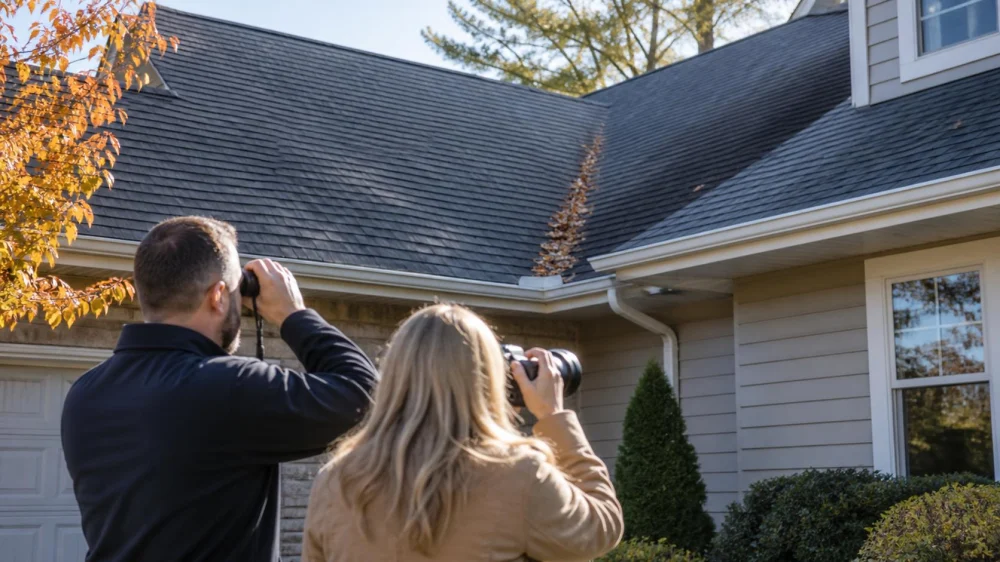
Leaves, needles, and branches in a roof valley can slow concentrated runoff and hide damaged shingles or flashing. Inspect with binoculars from stable ground and look indoors for moisture, but do not climb up, rake from a ladder, or blast debris with water. Hire a qualified roofer to remove it safely and inspect the drainage path underneath.
Lance Roofing & Siding Inc. / lance roofing and siding
6903 Dayton Springfield Rd, Enon, OH 45323, USA
Why roof valleys matter
A valley forms where two roof slopes meet. It carries water from a large surface area toward the eave, so flow can be faster and deeper than on the surrounding shingles. Valleys may be open with visible metal or closed with shingles covering the centre, depending on the approved design.
The valley must remain unobstructed and correctly integrated with underlayment, flashing, shingles, and gutters. Small defects can matter because this area handles concentrated water.

Gunner Roofing / gunner roofing
CromwellLower Connecticut River Valley Planning RegionConnecticut
700 Corporate Row, Cromwell, CT 06416, USA
What debris can cause
- Leaves and pine needles can form a wet mat that slows drainage.
- Twigs can catch more material and direct water sideways.
- Held moisture can encourage algae, moss, or material deterioration.
- Winter debris can interfere with snowmelt and contribute to ice buildup.
- Hidden fastener, shingle, or flashing damage may go unnoticed.
Debris does not prove a leak exists, but it raises the value of timely inspection. Water stains can also come from condensation, plumbing, or other roof penetrations.
Safe ground-level checks
- Walk the property only where the ground is stable and clear.
- Use binoculars or optical zoom to view the full valley.
- Look for a continuous debris line, displaced shingles, rust, or staining.
- Observe gutter flow from a protected location during ordinary rain.
- Photograph the same area after storms and seasonal leaf fall.
- Keep clear of overhead power lines and falling branches.
Do not lean from an upper window or stand on outdoor furniture for a better view.
Check inside the home
Where attic access is safe, inspect from a stable walkway without stepping between framing. Use a flashlight to look for dark staining, damp insulation, dripping fasteners, mould-like growth, or daylight. Do not touch wet electrical equipment.
In finished rooms below the valley, watch for ceiling stains, peeling paint, musty odor, or a bulge. Mark the edge of a stain lightly and record the date to show whether it expands.
Unsafe methods to avoid
- Do not climb onto a roof with leaves, moss, frost, snow, or moisture.
- Do not drag a rake or sharp tool across shingles or valley metal.
- Do not aim a pressure washer or garden hose uphill under roofing.
- Do not use a leaf blower from a ladder.
- Do not fasten a tarp through the valley without professional direction.
Even a low roof involves fall risk. Debris can conceal a soft deck, loose material, or an opening.
Plan professional service
An insured roofer can establish fall protection, remove debris with non-damaging tools, and inspect the exposed valley. Ask for photos of the valley lining, shingle edges, fasteners, sealants, underlayment transitions, eave exit, and nearby gutter.
The written scope should separate cleaning from repairs. If concealed damage appears, require a description, photos, price, and approval before extra work. Confirm whether the service affects roofing warranties.
Reduce repeat buildup
Have branches over the roof assessed by a qualified arborist. Keep gutters and downspouts maintained, and schedule ground-level roof observations after leaf fall and severe weather. A professional may recommend periodic cleaning based on tree cover and roof geometry.
Do not install screens, diverters, or flashing accessories without confirming that they are compatible with the roof design. A device that catches debris or redirects water can make the problem worse.
Urgent warning signs
Arrange prompt help if water enters during rain, shingles or metal are visibly displaced, or a branch has struck the valley. Leave the room and call emergency services when a ceiling bulges, water contacts electrical fixtures, structural material falls, or the roofline sags.
Important limitations
This article is general homeowner guidance, not a roof diagnosis or work-at-height instruction. Roof pitch, material, valley design, climate, code, and damage vary. Safe removal and repair require an on-site assessment by a qualified professional.
Sources and evidence notes
- Asphalt Roofing Manufacturers Association: maintenance and installation resources for asphalt roof systems.
- National Roofing Contractors Association: professional roof-inspection and maintenance information.
- Occupational Safety and Health Administration: fall protection and ladder safety for roofing work.
- Roofing manufacturer instructions: system-specific valley construction, cleaning, and warranty requirements.
Frequently asked questions
Can I clear a valley with a telescoping pole?
A pole can damage roofing, dislodge material onto people, and require standing in a fall zone. Ask a professional to choose the safe method.
Does valley debris always cause leaks?
No, but it can slow drainage and hide defects. Removal should include inspection rather than assuming the surface beneath is sound.
Should a roof valley hold water?
It should drain freely. Persistent ponding, staining, or a visible low spot deserves professional assessment.
How often should valleys be checked?
Observe from the ground seasonally and after major storms, with extra attention where trees shed heavily. Professional frequency depends on the property.
Conclusion
A roof valley is a high-flow drainage channel, so accumulated debris deserves attention. Keep the response safe: observe from the ground, document changes, check indoors, and hire a professional to remove material and inspect what it concealed. Preventive tree and gutter maintenance can reduce repeat buildup without putting a homeowner on the roof.


 Wetherall Roofing & Contracting Inc3.0 (5 reviews)
 Blevins R & R0.0 (0 reviews)
 PINTAIL D&C Inc.4.0 (88 reviews)
 A-American Remodeling Co, Inc4.0 (46 reviews)
 Lion Roofing LLC0.0 (0 reviews)
 J. Salvatore & Sons Roofing4.0 (99 reviews)
 Roof Warranty Guide: Compare Coverage Before You Sign
 How to Make an Insurance Claim for Roof Damage Caused by Neighbor's Construction
 Do You Need to Replace Roof Before Selling? A Comprehensive Guide
 Gutter Installation and Roof Health: Why They Matter Together
 Choosing Between Residential and Commercial Roofing Solutions
 The Best Roofing Materials for a Home in a Wildfire-Prone Area (Class A)