
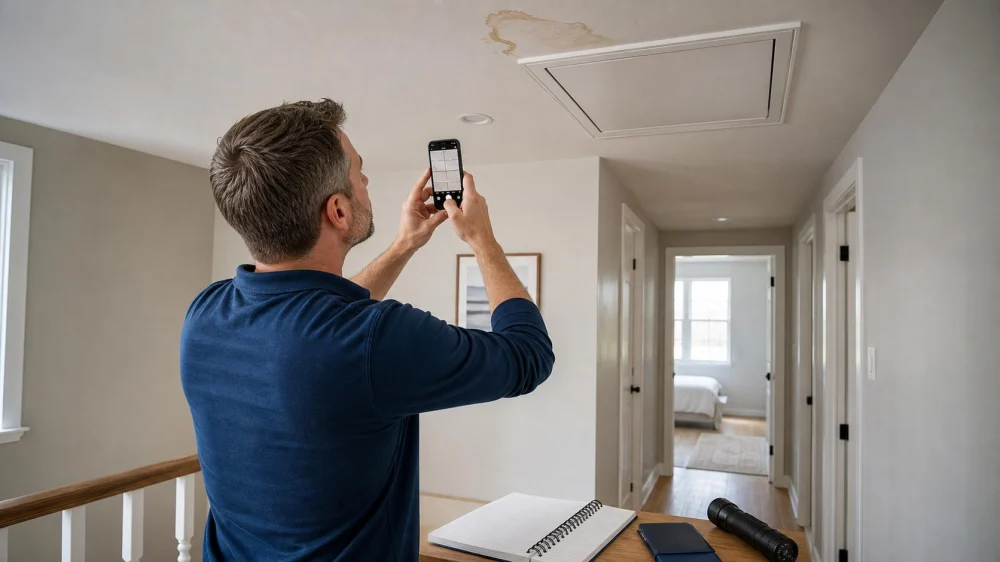
How to Prepare Indoor Roof Leak Notes for a Roofer
On this page
Quick answer
Before a roofer inspects a suspected leak, photograph ceiling stains, wall marks, attic dampness, dripping locations, and nearby vents or fixtures. Write down when the stain appeared, what weather preceded it, whether it grows, and which rooms are affected. Do not climb onto the roof; indoor notes help guide a safer professional inspection.

SB Pro Roofing / sb pro roofing
Pinellas ParkPinellas CountyFlorida
6358 49th St N, Pinellas Park, FL 33781, USA
Why indoor notes help
Indoor roof leak notes are photos and observations from inside the home that help a roofer connect visible water signs with likely roof areas, flashing points, vents, valleys, skylights, or attic conditions.
Water rarely falls straight down from the entry point. It can travel along rafters, insulation, pipes, and drywall before appearing as a stain.
Victors Home Solutions / victors roofing
2722 E Michigan Ave suite 239, Lansing, MI 48912, USA
What to document inside
Document calmly and safely before stains are painted, wiped away, or covered:
- Wide photo of the room showing where the stain is located.
- Close-up photo of the stain or bubbling paint.
- Nearby ceiling fixtures, vents, skylights, chimneys, or upstairs walls.
- Whether the area is damp, dry, spreading, or dripping.
- Date, time, and recent weather: rain, wind, hail, snow, ice, or thaw.
- Any previous repairs, roof age, or warranty details if known.
Attic and access details
If attic access is safe and easy, note where the hatch is and whether there is visible damp insulation, staining, musty smell, or daylight around penetrations. Do not step into unsafe attic spaces or disturb insulation if you are unsure.
This preparation is best for helping a roofer start the inspection efficiently. It is not ideal for diagnosing the leak yourself or delaying urgent service when water is active.
When to call sooner
Call a roofer promptly if the stain grows, water drips during rain, insulation is wet, shingles are missing, or a leak appears near chimneys, skylights, vents, or roof valleys. Seek urgent help if a ceiling sags or water is near electrical fixtures.
Move valuables away from the area if safe, but avoid opening ceilings or climbing onto the roof to investigate.
Leak notes checklist
- Photograph the room and the close-up stain.
- Write down when the mark first appeared.
- Note recent weather and whether the stain changes after storms.
- List affected rooms and floors.
- Check for musty smells or damp insulation only if safe.
- Gather roof age, previous repair, and warranty information.
- Keep buckets or towels in place for active drips if safe.
- Contact a roofer with the notes and photos.
Important notes
This article is general roofing guidance for homeowners in the United States. It does not replace professional inspection, building code requirements, insurance instructions, or emergency services.
Do not walk on the roof, climb ladders in unsafe conditions, or touch wet electrical fixtures. If safety is uncertain, leave the area and contact qualified help.
FAQ
Can a ceiling stain be old?
Yes. That is why timing matters. Mark the edge lightly with tape nearby or photograph it over time to see whether it grows after weather events.
Should I paint over a roof leak stain?
Not before the leak is evaluated and dry. Painting can hide useful clues and does not fix the cause.
What if the leak only happens during wind-driven rain?
Tell the roofer. Wind direction and storm intensity can point toward flashing, siding, vents, or roof-edge issues.
Do indoor notes replace a roof inspection?
No. They help the roofer understand symptoms, but the roof, attic, and exterior details may still need professional evaluation.
Evidence notes
This guide is based on common roof leak investigation practices: documenting stain location, timing, weather connection, attic signs, access details, and safety boundaries before professional inspection.
Next steps
Take photos, write a short timeline, and call a roofer before the next major storm if possible. Clear indoor notes can make the first inspection more focused and useful.


 Deschutes Roofing0.0 (0 reviews)
 McKinley Roofing Specialists1.0 (1 reviews)
 Peach State Roofing Inc.5.0 (1 reviews)
 Patriot Roofing and Restoration LLC0.0 (0 reviews)
 Golden Touch Roofing5.0 (39 reviews)
 Force Field Roofing LLC4.0 (64 reviews)
 Slate Roofing: The Ultimate Guide to Cost, Installation, and Maintenance
 How to Choose Between Architectural and 3-Tab Shingles
 The Difference Between Roof Repair and Roof Restoration: Which Do You Need?
 Can a Roof Be Repaired in Winter? What You Need to Know
 The Process of Installing a Slate Roof: The Gold Standard in Roofing Longevity
 How to Prevent Roof Leaks During Heavy Rain