

Roof Decking Replacement: Price Hidden Damage Before Tear-Off
Table of contents
Quick answer
Roof decking is often hidden until old covering and underlayment are removed. Before work starts, put a unit price, measurement method, approval threshold, material specification, and photo requirement in the contract. Require the roofer to show deteriorated areas before replacement when practical and to document final quantities so a necessary repair does not become an open-ended surprise.
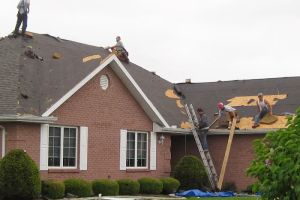
Lance Roofing & Siding Inc. / lance roofing and siding
6903 Dayton Springfield Rd, Enon, OH 45323, USA
Why decking is hidden
Decking or sheathing forms the solid roof surface over rafters or trusses. Leaks, condensation, age, fastener damage, or prior installation problems can leave sections soft, delaminated, broken, or unsuitable for new roofing. Attic clues may suggest a problem, but full condition is frequently unknown until tear-off.
Replacement decisions should follow applicable code, manufacturer instructions, permit requirements, and the professional assessment—not appearance alone.

Gunner Roofing / gunner roofing
CromwellLower Connecticut River Valley Planning RegionConnecticut
700 Corporate Row, Cromwell, CT 06416, USA
Price it before work
- Define the replacement unit: per sheet, square foot, linear foot, or documented labour-and-material amount.
- Name the panel type, thickness, grade, edge support, and fasteners, subject to approved field conditions.
- State what removal, disposal, delivery, labour, clips or blocking, and permit effects are included.
- Include an allowance only with a clear unit price and reconciliation method.
- Set a quantity or dollar threshold that requires written owner approval.
- Explain how structural framing damage will be handled separately.
Public construction specifications commonly use allowances or unit prices when existing deck condition cannot be quantified before demolition. A residential contract can borrow the same clarity without guessing the final quantity.
Approval during tear-off
- The crew exposes and safely marks questionable areas.
- The contractor records wide and close photos with location context.
- The owner or authorised representative receives the proposed quantity and cost.
- Required inspector, designer, or manufacturer direction is obtained.
- A written change approval is issued before work beyond the pre-authorised threshold.
- The weather-tightening plan remains active so the home is not left exposed.
Do not delay urgent temporary protection while debating cost. The contract should identify who may authorise emergency work and the financial cap.
Document the repair
Request before-and-after photos, measured quantities, product labels, fastening details where visible, inspection records, and the final invoice calculation. Confirm whether replaced decking affects ventilation, insulation, solar attachments, warranties, or a permit inspection.
Limitations
This guide does not decide whether any panel is structurally acceptable or specify a universal thickness. Requirements vary by jurisdiction, span, roof system, wind or snow loads, fire classification, and manufacturer. Structural or widespread deterioration may require an engineer and revised permit.
FAQ
Can a roofer know the exact quantity before tear-off?
Sometimes attic access or prior records help, but concealed damage often prevents an exact count.
Is an allowance the same as a fixed price?
No. It is a budget placeholder that should be reconciled against documented actual work under the contract.
Should every old deck be replaced?
No. Suitability depends on condition and project requirements, not age alone.
What if damage exceeds the approval cap?
Pause the affected area safely, review evidence and requirements, and sign a clear change order before proceeding.
Sources and evidence notes
- SAM.gov public roofing scope — example of a decking allowance reconciled to deteriorated conditions found during demolition.
- City of San Diego: Minimum Standards for Renewal of Roof Covering — examples of sheathing and structural scope affecting requirements.
Next steps
Before signing, add the decking unit price, material specification, approval cap, weather-protection duty, and documentation process. During tear-off, review location-based photos and approve only verified quantities in writing.


 Know-A-Guy Roofing & Exteriors, LLC4.0 (53 reviews)
 Baran & Son Roofing4.0 (27 reviews)
 Urban Enterprise Construction LLC5.0 (20 reviews)
 The Roof Doctor4.0 (81 reviews)
 Expert Exteriors LLC4.0 (261 reviews)
 SafePro Roofing & Siding0.0 (0 reviews)
 How to Inspect Your Roof from the Ground: A Simple Guide for Homeowners
 The Real Cost of Ignoring a Small Roof Leak and How to Protect Your Home
 The Best Roofing Materials for a Mediterranean or Spanish-Style Home
 Roofing Worksite Access: Plan Doors, Gates, and Visitors
 The Signs of UV Damage on an Asphalt Shingle Roof: Cracking and Curling
 The Real Cost of Ignoring a Small Roof Leak