
Roofing Worksite Access: Plan Doors, Gates, and Visitors
Table of contents
Quick answer
Before roofing starts, agree on one crew entrance, one household route, which gates stay locked or open, and who may enter the home. Reschedule routine visitors and deliveries, keep children and pets away from every work zone, and give the foreperson one household contact. Never move barriers or walk beneath active roof work; ask the foreperson to clear a route when access must change.

JK Contractors / jk roofing
West BendOzaukee CountyWisconsin
3058 County Rd Y, West Bend, WI 53095, USA
Map household and crew zones
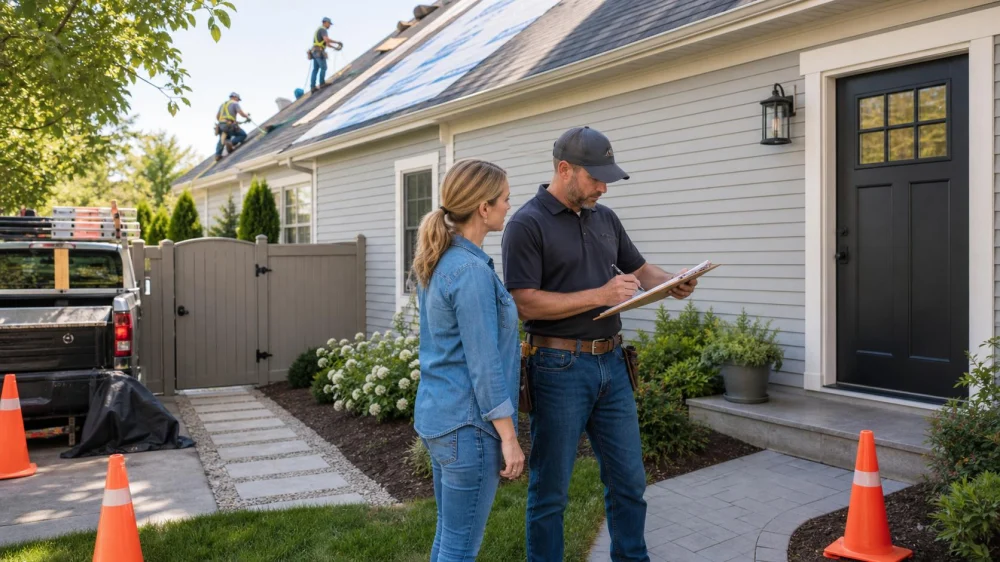
Walk the property with the contractor during the pre-start meeting. Identify the roof drop zone, ladder areas, material staging, waste container, equipment parking, and cleanup route. Then choose a household entrance that stays outside those zones.
- Primary crew path from vehicles to the work area.
- Household path to a vehicle, street, or accessible pickup point.
- Doors, gates, garage bays, and windows that must remain closed.
- Emergency exits that cannot be blocked.
- Areas needed for home-care workers or mobility equipment.
- Neighbour, sidewalk, mailbox, and utility access affected by the project.
Put the agreed map or written description in the project messages. A simple shared plan is more reliable than different occupants making changes during the day.
Lance Roofing & Siding Inc. / lance roofing and siding
6903 Dayton Springfield Rd, Enon, OH 45323, USA
Set door and gate rules
Decide whether workers will need any interior access, such as a prearranged attic inspection. Exterior roofing work does not automatically authorize entry into every part of the home. Ask the company how workers identify themselves and who will request access.
- Name the one exterior door approved for scheduled entry, if any.
- Keep other doors locked and post private household reminders inside.
- Tell the foreperson which gates must remain latched for pets or security.
- Move spare keys and keypad codes out of casual view.
- Use temporary access codes only when your system supports them and the contract plan requires access.
Do not lock a gate that traps workers or blocks an emergency route. Confirm changes with the foreperson before leaving the property.
Reschedule visitors and deliveries
Pause or redirect routine package, grocery, landscaping, cleaning, and service appointments. A delivery driver who follows the normal path may enter a debris or ladder zone. Use carrier tools to hold or reroute packages when available.
Tell essential visitors where to wait and give them the household contact number. Do not ask them to step over cones, walk beside a waste container, or use a gate without contractor approval. For school transport, home health care, accessible transit, or medical deliveries, coordinate a specific time and clear route with the foreperson.
Keep the address visible for emergency responders, but do not place personal signs where they could be mistaken for official worksite controls.
Keep pets and children separated
A closed gate is not enough if workers need to pass through it repeatedly. Move pets indoors, off-site, or into a secure area that does not share the crew path. Tell the foreperson where animals are located and never depend on workers to supervise them.
Children should not use the yard, driveway, porch, or side path during active roofing. Store outdoor toys so they do not tempt a child into the zone. Explain that ladders, material stacks, trucks, tools, and the waste container are not play equipment.
At the end of the day, wait until the foreperson confirms cleanup and access status before releasing pets or allowing outdoor play.
Discuss crew access and facilities
Ask the contractor how drinking water, rest breaks, restroom access, parking, and waste handling will be managed. Do not wait until the first workday to discover that the parties made different assumptions.
If interior restroom access is not part of the agreement, the contractor should arrange an alternative under the project plan. If access is agreed, define the entry door, route, hours, floor protection, and private rooms that remain closed. Valuable items, medications, documents, and weapons should be secured regardless of who is working at the property.
Direct questions or concerns to the foreperson or company contact rather than confronting individual workers.
Reset access at the end of each day
The daily stop does not always mean the site is fully open. Ladders may be removed or secured, while materials, tarps, or a waste container remain. Ask the foreperson which routes are released and when work resumes.
- Confirm gates and exterior doors are in their agreed state.
- Check the household route from a safe, released area.
- Verify vehicles can leave if needed overnight.
- Report a loose barrier, sharp debris, failed light, or blocked exit.
- Keep children and pets away from stored material and equipment.
Do not reposition ladders, tarps, cones, magnetic sweepers, or material stacks. Call the project contact if they affect a required route.
Access checklist
- Map crew, household, visitor, and emergency routes.
- Agree on doors, gates, codes, and any scheduled interior entry.
- Secure private rooms, documents, medications, and valuables.
- Pause or redirect routine deliveries and service visits.
- Coordinate essential accessible or medical access in advance.
- Keep pets and children separated from every work route.
- Clarify crew facilities and parking with the contractor.
- Get an end-of-day access update before using outdoor areas.
Limitations
Every property, household, contractor, and project has different access needs. This guide supports planning but does not set contract terms, worker policies, emergency routes, insurance requirements, or local worksite rules. The contractor must establish site-specific safety controls, and residents should communicate disability, health, security, or emergency needs directly before work begins.
Frequently asked questions
Do roofers need to enter my home?
Not always. Interior access may be needed for an agreed attic check or another scope item. Confirm the reason, timing, route, and authorized person before work starts.
Can I leave a side gate unlocked for the crew?
Only as part of the agreed plan. Discuss pets, security, emergency egress, and end-of-day locking with the foreperson rather than leaving access to assumption.
Can packages still be delivered during roofing?
It is usually safer to hold or redirect nonessential packages. A normal delivery path may cross a ladder, debris, vehicle, or material zone.
What if I need wheelchair or walker access?
Tell the contractor before scheduling. Agree on a step-free route and timing that remain clear of roofing work, and coordinate any essential transport or care visit.
Can I move a cone to get out of the driveway?
No. Contact the foreperson and wait for the work zone to be cleared by the responsible crew. A cone may mark a hazard that is not obvious from the ground.
Next steps
Create a one-page access plan with the contractor: crew entrance, household route, gate rules, interior access, visitor plan, pet location, and daily contact. Share it with every resident and essential visitor, then review it with the foreperson at the start and end of each workday.




 Roofing Guys5.0 (7 reviews)
 CMS Roofing and Restoration4.0 (165 reviews)
 Alex Roofing Co Inc2.0 (16 reviews)
 Fairfax Va Roofing Services5.0 (1 reviews)
 Bison Roofing5.0 (31 reviews)
 TJ's Shingles LLC4.0 (66 reviews)
 Roof Ventilation Problems: Signs, Solutions, and Cost
 The Process of Installing Synthetic Underlayment: Faster and Safer Than Felt
 The Best Attic Insulation Types to Work with Your Roofing System for Efficiency
 Can a Roof Leak Cause Mold? What Homeowners Need to Know
 How to Choose a Roofing Contractor with a Good Rating on the BBB | Pro Found Roofing
 Roof Replacement Before or After Solar Installation? What You Need to Know