
Roof Drip Edge: What It Does and Safe Signs to Check
On this page
Quick answer
A roof drip edge is metal flashing at roof edges that helps direct water away from roof decking and fascia and toward the intended drainage path. From the ground, look for missing, bent, rusted, separated, or uneven sections and staining behind gutters. Do not climb, lift shingles, or bend metal. Water behind the gutter, soft fascia, active leaks, or storm damage needs a qualified roofer.
This guide is for U.S. homeowners. Roof design, code, climate, material, gutter details, and installation sequence vary. A ground check cannot confirm concealed conditions.

Gunner Roofing / gunner roofing
CromwellLower Connecticut River Valley Planning RegionConnecticut
700 Corporate Row, Cromwell, CT 06416, USA
What a drip edge does
Drip edge is formed metal installed along eaves and rakes. It supports water shedding at the boundary where roofing ends and wood or trim begins. Its relationship to underlayment, shingles, fascia, and gutters matters.
It is not a substitute for correct shingles, underlayment, flashing, ventilation, gutters, or roof slope. The visible face may be only part of the installed piece.

Holden Roofing (Houston Corporate) / holden roofing
RosenbergFort Bend CountyTexas
2128 1st St, Rosenberg, TX 77471, USA
Check from the ground
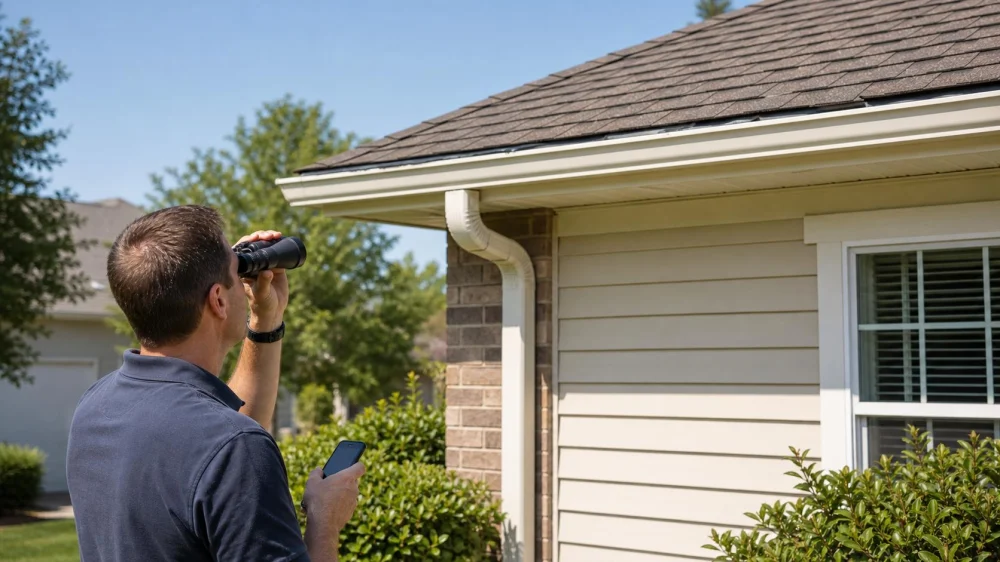
Use binoculars or a camera zoom from stable ground in daylight. Walk the perimeter without entering neighbour property or standing below loose material.
- continuous metal along expected edges;
- sections that appear bent, lifted, wavy, or separated;
- rust, peeling finish, or sharp loose corners;
- gaps between edge metal and gutter;
- dark staining on fascia or soffit;
- wood swelling, peeling paint, or rot-like damage; and
- changes after wind, hail, tree impact, or gutter work.
Do not use a ladder to obtain a closer view. Roof edges are high-consequence fall areas.
Watch water patterns
From a protected indoor or distant ground location during ordinary rain, observe whether water enters the gutter, runs behind it, drips from fascia, or collects at corners. Never stand beneath an overflowing or icy edge.
Record rainfall intensity and wind. A problem seen only in wind-driven rain still matters. Water can travel, so the visible drip may not identify the defect.
Separate related gutter and fascia issues
Overflow can result from gutter blockage, slope, downspout restriction, roof runoff volume, ice, or installation details. Stained fascia can reflect current or old moisture.
A roofer may need to coordinate with a gutter professional or carpenter. Do not push the gutter, remove guards, or insert sealant from below to guess at the cause.
When to call a roofer
Arrange inspection for missing or loose metal, exposed wood, recurring water behind gutters, soft fascia, active interior moisture, damaged shingles at the edge, or storm impact.
Keep people away from hanging metal and call urgent help after major structural damage or electrical exposure. Document conditions for insurance before temporary work when safe and required.
Safe observation checklist
- Inspect in daylight from stable ground.
- Use zoom instead of a ladder.
- Compare eaves and rake edges.
- Photograph gaps, bends, corrosion, and stains.
- Observe water only from a safe location.
- Note storm or gutter-work timing.
- Do not lift shingles or bend metal.
- Share photos with a qualified roofer.
Limitations and important notes
- Paint colour can make edge metal hard to see.
- Some roof systems use different perimeter details.
- Ice, snow, and wet ground add hazards; wait for safe observation.
- Sealant is not a universal repair for flashing geometry.
- Code and manufacturer requirements depend on location and system.
Frequently asked questions
Is drip edge required on every roof?
Requirements vary by jurisdiction, roof system, and work scope. Ask a qualified local roofer or building authority.
Can drip edge be added later?
Sometimes, but integration with roofing and underlayment is critical. A roofer must assess feasibility.
Why is water dripping behind my gutter?
Possible causes include edge-flashing details, gutter position, blockage, overflow, or other roof defects. It needs diagnosis.
Can I bend a loose corner back?
No. Sharp metal, height, and concealed damage create risk. Keep people away and call a roofer.
Does rust mean immediate replacement?
Severity and location matter. Photograph it and obtain professional assessment before it perforates or stains related materials.
Sources and evidence notes
The guidance reflects standard roof-edge water management: perimeter metal helps shed water, but performance depends on integration with adjacent layers. Ground observation can identify warning signs but not installation details.
Document one roof edge
From the ground, photograph the full eave and then any uneven section. Note whether staining is dry, when rain last occurred, and whether gutter or roof work was recent. Send the wide and close images to a qualified roofer instead of attempting an edge repair yourself.

 UltraTop Roofing Companies5.0 (30 reviews)
 Adamson Roofing Company4.0 (106 reviews)
 BCROOFING4.0 (21 reviews)
 strong Roofing LLC0.0 (0 reviews)
 Roofing Guys5.0 (6 reviews)
 Top Tier Exteriors5.0 (43 reviews)
 How Much Does a Roof Replacement Really Cost in 2026? | Cost Breakdown
 Top-Rated Roofing Brands You Can Trust in 2024 – Best Roofing Solutions
 The Pros and Cons of Installing a Roof Overlay Instead of Full Replacement
 Roof Replacement Cost with Gutters and Downspouts: Complete Guide
 How to Choose a Roofing Contractor Who Offers Financing Options
 How to Choose the Best Roof Color for Energy Efficiency