
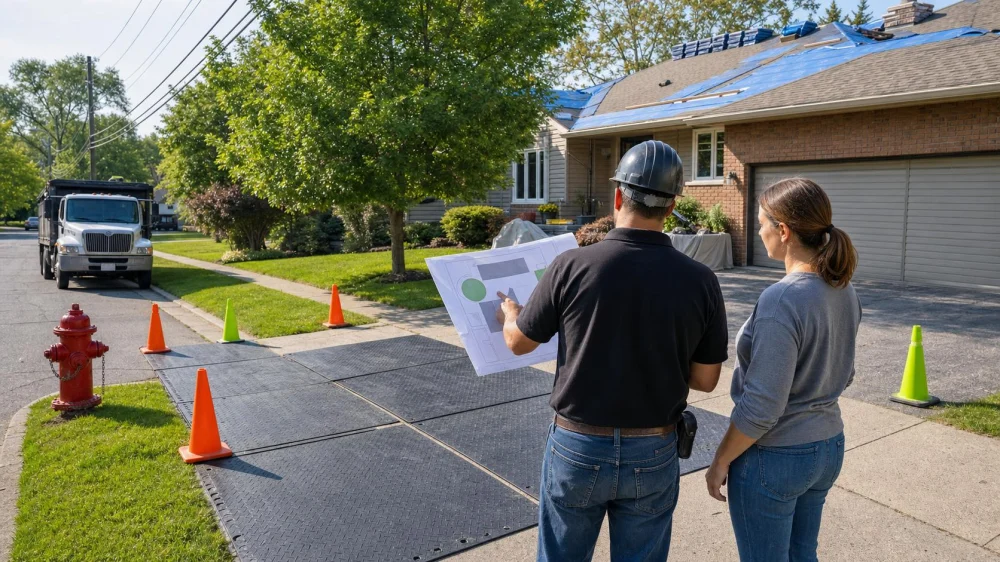
Roofing Dumpster Placement: Driveway and Access Checks
Table of contents
Quick answer
Before a roofing dumpster or dump trailer arrives, confirm its dimensions, loaded weight, delivery method, pickup window, and permitted location. Ask the contractor to evaluate driveway condition, slope, drainage, overhead wires, underground services, garage access, fire routes, and neighbour impact. Use an approved protection plan, mark the placement area, move vehicles first, and photograph surfaces. Never stand behind, beside, or under the container during delivery or removal.
Victors Home Solutions / victors roofing
2722 E Michigan Ave suite 239, Lansing, MI 48912, USA
Confirm the container and schedule
- Dumpster, dump trailer, or truck type and external dimensions
- Empty and expected loaded weight
- How it is rolled off, lifted, stabilised, and removed
- Delivery, swap, and pickup windows
- Whether a street-use or right-of-way permit is needed
- Who orders, controls, fills, and pays for the container
- Material limits and overfill charges
- Contact for urgent relocation or blocked access
A short roofing job can still require several container movements. Plan each one, not only initial delivery.

Gunner Roofing / gunner roofing
CromwellLower Connecticut River Valley Planning RegionConnecticut
700 Corporate Row, Cromwell, CT 06416, USA
Protect the driveway
Concrete, asphalt, pavers, gravel, and decorative surfaces carry loads differently. Existing cracks, settlement, thin edges, recent paving, heat-softened asphalt, and underground voids can increase damage risk. Ask the contractor and container provider how they assess the surface and distribute loads.
Wood boards or protective mats are not a universal guarantee. They must be correctly sized, placed, and accepted by the provider; an improvised board can shift or become a projectile. Keep the container away from unsupported driveway edges, septic components, drainage structures, and soft ground.
Photograph the entire driveway before delivery in good light, including cracks, stains, curbs, garage apron, pavers, and landscaping. Save dated copies with the contract.
Keep critical access open
- Front, side, and accessible entrances
- Garage doors and vehicles needed during the project
- Fire hydrants, fire lanes, and emergency responder approach
- Utility meters, shutoffs, panels, and service equipment
- Mail, parcel, waste, and school transport access
- Neighbour driveways and shared lanes
- Sidewalks, wheelchair routes, and public right-of-way
- Contractor material delivery and worker egress
Do not trap a household vehicle behind the container. Move every vehicle that may be needed before the delivery truck arrives.
Check utilities and overhead hazards
A large truck and raised container need more clearance than a parked car. Identify overhead electrical, communication, and service lines, tree limbs, eaves, signs, and lighting. The provider should verify its operating envelope and applicable clearance rules.
Underground gas, water, electrical, irrigation, septic, drainage, and communication systems also matter. Do not place stabilisers or heavy loads over unknown buried infrastructure. Use the applicable utility-location process before stakes, anchors, or ground disturbance, and provide maps of private lines where available.
Control roofing debris
The container should be close enough for controlled debris handling without encouraging workers to throw material across public or occupied areas. The contractor must establish exclusion zones and a safe work method. Homeowners, children, pets, visitors, and neighbours should stay outside.
- Do not climb into or play around the container.
- Keep doors and gates secured as the provider instructs.
- Do not add household waste or hazardous material.
- Do not allow debris above the fill line.
- Use approved covers when wind, rain, or transport rules require them.
- Report sharp debris outside the work zone rather than picking it up bare-handed.
Delivery-day checklist
- Move vehicles, toys, planters, hoses, and loose items.
- Confirm permit and placement markings.
- Photograph surfaces and nearby property.
- Close windows and keep occupants indoors or away.
- Have one authorised contractor representative meet the driver.
- Keep everyone out of the truck’s path and blind spots.
- Let the driver decide whether conditions permit safe placement.
- After placement, verify doors, walkways, drainage, and emergency access.
Rain, snow, ice, soft ground, parked vehicles, or a new overhead obstruction may require a different plan. Do not pressure the driver to use an unsafe location.
Removal and final inspection
Before pickup, the contractor should secure the load, remove loose debris around the container, and confirm the route is clear. Keep people inside or well away during lifting and transport. Do not park where the truck needs to manoeuvre.
After removal, photograph the surface, inspect drains and landscaping, and use a magnetic sweep where appropriate for nails—while understanding that magnets do not capture every sharp object. Wear sturdy footwear and keep children and pets away until cleanup is complete. Document damage promptly through the contract process.
Limits and urgent issues
This guide cannot determine driveway capacity, legal placement, utility clearance, or safe equipment operation. The contractor, container provider, utility locator, engineer, municipality, and insurer may each have requirements. Call emergency services for contact with a power line, gas odor, fire, container movement, collapse, injury, or blocked emergency response. Stay away from fallen lines and equipment touching them.
Frequently asked questions
Can a roofing dumpster crack a driveway?
Heavy concentrated loads can damage some surfaces. Condition, material, support, weather, equipment, and placement all matter.
Should it go on the street?
Only where local rules, permits, traffic safety, and provider requirements allow. Do not block sidewalks, hydrants, or sight lines.
Who removes nails after pickup?
Put cleanup responsibility and the number of sweeps in the roofing contract. Inspect again after the container leaves.
Can I move the container myself?
No. Contact the authorised provider. Moving or loading equipment without approval can be dangerous and damage property.
Sources
Use the roofing contract, container provider’s delivery rules, local right-of-way and permit requirements, utility-location instructions, and property documents. OSHA’s struck-by hazard resources explain equipment blind spots and falling or swinging objects; homeowners should remain outside the work zone while trained contractors apply job-specific controls.
Next steps
Ask for the container data and proposed location in writing, photograph the driveway, verify utilities and permits, then draw the delivery route and every access point that must stay open. Resolve conflicts before the truck is dispatched.



 BCM Roofing5.0 (3 reviews)
 J Taylor Construction4.0 (208 reviews)
 Jones Construction5.0 (5 reviews)
 EverNew Roofing5.0 (16 reviews)
 Silicoat Roofing Inc5.0 (10 reviews)
 DHT Construction, LLC4.0 (8 reviews)
 The Best Time to Paint a Metal Roof for the Best Adhesion and Longevity
 Should You Stay Home During Roof Replacement? Pros and Cons
 How to Fix a Leak in a Roof Valley on a Metal Roof
 What Is Roof Pitch and Why It Affects Cost
 Do You Need to Replace Roof Before Selling? What Homeowners Should Know
 DIY Roof Repair Tips: Safely Fix Roof Issues Yourself