
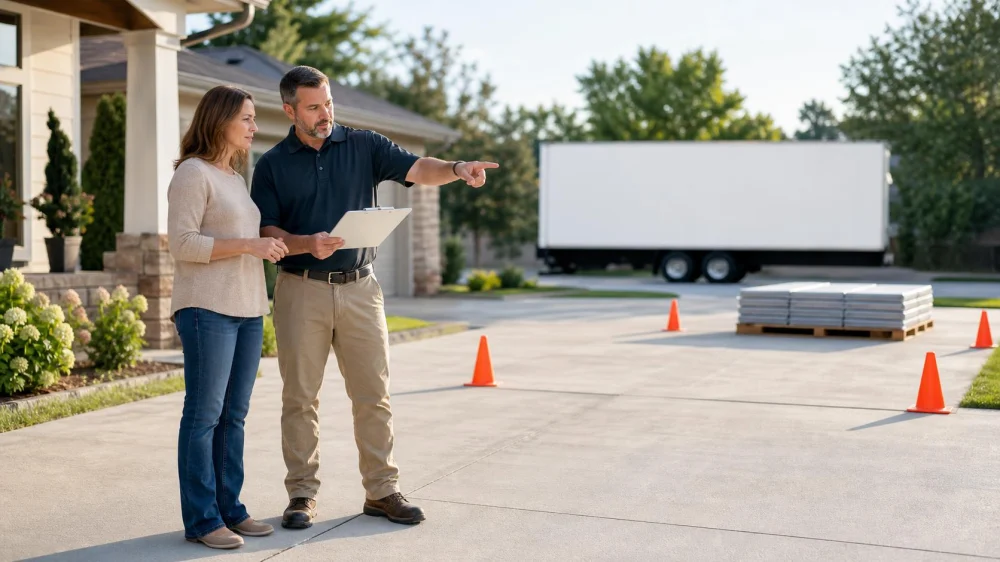
Roofing Material Delivery Day: A Homeowner Checklist
On this page
- Quick answer
- Confirm the delivery plan
- Create a simple site map
- Protect access and the driveway
- Identify overhead and underground hazards
- Plan for household movement
- Verify materials without entering the work zone
- Prepare for weather
- Check the property after delivery
- Safety boundaries and limitations
- Delivery-day checklist
- Frequently asked questions
- Sources and evidence notes
- Next steps
Quick answer
Before roofing materials arrive, confirm the date, vehicle size, unloading method, staging location, driveway limits, overhead lines, buried utilities, and the household’s safe entrance. Move cars, deliveries, children, and pets away from the route. Let the contractor and supplier control unloading; verify quantities and product details from a safe area after the load is stable.
A material delivery is part of the construction site. Trucks, forklifts, conveyors, booms, pallets, bundles, and workers can create struck-by, crushing, fall, and property-damage hazards. The contractor and delivery company should plan and control the operation.

SB Pro Roofing / sb pro roofing
Pinellas ParkPinellas CountyFlorida
6358 49th St N, Pinellas Park, FL 33781, USA
Confirm the delivery plan
Ask the roofing contractor—not only the supplier—for a delivery window and site contact. The contractor should coordinate what is arriving, who accepts it, where it goes, and whether installation begins the same day.
Confirm:
- the delivery date, time window, and weather-delay process;
- the truck type, approximate length, and turning needs;
- whether materials will be placed on the ground, driveway, trailer, lift, or roof;
- whether a conveyor, forklift, crane, boom, or hand unloading will be used;
- the number and type of pallets, bundles, rolls, vents, flashing pieces, and accessories;
- who directs vehicle movement and signs the delivery ticket;
- who protects the property and responds to damage;
- where rejected, excess, or damaged materials will go.
Do not promise access based on a typical parcel truck. A roofing delivery vehicle may need more height, width, turning radius, and stable surface than expected. Send current photos of the street, drive, gates, trees, wires, and staging area when the contractor requests them.
Lance Roofing & Siding Inc. / lance roofing and siding
6903 Dayton Springfield Rd, Enon, OH 45323, USA
Create a simple site map
Sketch the street, driveway, home, garage, fences, gates, utilities, trees, slopes, septic area, well components, irrigation heads, drains, retaining walls, and preferred household entrance. Mark areas that cannot bear a truck or pallet.
Walk the map with the contractor before delivery. A neat open lawn may conceal a septic tank, drain field, shallow utility, soft fill, or sprinkler line. Pavers, decorative concrete, asphalt edges, and small bridges can have load limits. The contractor should decide whether more assessment or a different placement method is needed.
Mark the approved staging footprint with the contractor’s chosen method. Leave room for workers to open packaging and move bundles without blocking a door, garage, hydrant, meter, or public sidewalk. Materials should not obstruct sight lines for vehicles leaving the property.
Protect access and the driveway
Move household vehicles before the delivery window. Park far enough away that the truck can turn and that falling straps, shifting pallets, or moving equipment cannot reach the vehicle. Tell visitors and service providers to postpone arrival.
Discuss driveway condition and load concerns in advance. Photograph existing cracks, stains, settlement, paver movement, and soft edges. Ask whether the contractor uses protective boards, an alternate staging surface, or a smaller vehicle. Protection methods must be selected by people who understand the equipment loads; homeowners should not place loose boards in the route without approval.
Keep garage doors closed during unloading unless the garage is an approved staging area. Remove portable basketball hoops, toys, planters, hoses, cords, and low decorations. Unlock only the gate needed for the operation and make sure it can be secured afterward.
If the delivery would block a public sidewalk, road, fire route, shared lane, or neighbour’s access, ask the contractor who obtains required permits or traffic control. Do not direct traffic yourself unless you are trained, equipped, and authorized.
Identify overhead and underground hazards
Point out overhead electrical and communications lines, service drops, tree branches, eaves, carports, awnings, and exterior lights. Delivery conveyors, booms, raised dump bodies, and forklifts need clearance. The contractor and delivery operator must maintain the required safe distance from energized lines and choose a different method when clearance is inadequate.
Show the contractor utility meters, gas equipment, air-conditioning units, generators, exterior outlets, wellheads, septic lids, cleanouts, and irrigation controls. Keep them accessible and protected from pallets and vehicle movement.
Do not move, cover, or disconnect a utility component yourself to make space. Contact the utility or appropriate qualified trade when relocation or isolation is required. For digging, anchoring, or ground disturbance, the contractor should use the applicable 811 process and local requirements.
Trim branches only through an agreed, safe plan completed before the truck arrives. Never cut near electrical lines. Utility vegetation work may require the utility provider or a qualified line-clearance professional.
Plan for household movement
Choose one entrance outside the truck route, unloading radius, roof edge, ladder locations, and material path. Tell every household member which door to use and when the exterior area is closed. If no safe door remains during unloading, stay inside until the site lead releases a route or leave before delivery begins.
Keep children indoors and supervise them. Secure pets in a room away from the active entrance or arrange off-site care. Delivery noise and strangers can cause a pet to bolt through an open gate.
Pause mail, grocery, landscaping, and other service visits during the delivery window. Add delivery instructions in the vendor app, but do not invite a parcel driver to walk through the roofing work zone. Reschedule home healthcare or other essential visits if safe access cannot be maintained.
Let neighbours know when a large truck may temporarily affect the street. Provide the contractor’s site contact for operational questions instead of asking neighbours to approach the driver.
Verify materials without entering the work zone
The contractor should inspect and accept the load. The homeowner can review documents and stable materials from a released area. Do not climb on pallets, cut straps, move bundles, or walk beneath a conveyor or roof-loading operation.
Compare the delivery ticket with the contract for:
- manufacturer and product line;
- colour and profile;
- shingle, tile, metal, membrane, or underlayment type;
- ridge, starter, flashing, vent, fastener, sealant, and accessory products;
- quantity and waste allowance;
- visible shipping damage or wet packaging;
- lot or batch information when relevant to appearance or warranty.
A package colour name on a screen may not match the installed roof under outdoor light. The final selection should already be documented before delivery. If the label or material differs, stop acceptance through the contractor rather than opening multiple bundles.
Ask the contractor to photograph labels and pallet condition before products move to the roof. Keep copies of the delivery ticket with the contract and warranty file.
Prepare for weather
Rain, snow, ice, strong wind, extreme heat, and thunderstorms can change both delivery and rooftop staging. Ask who makes the postpone decision and how the supplier protects materials in transit and on site.
Materials should be stored according to the manufacturer’s written instructions. Covering is not simply placing a loose tarp over pallets; ventilation, moisture, wind, and product deformation may matter. Let the contractor select and secure protection.
If thunder is heard or lightning is observed, stay inside a substantial building or hard-topped vehicle and follow the site’s lightning plan. The National Weather Service states that no place outside is safe during a thunderstorm and warns people to stay away from rooftops, ladders, and large equipment.
Do not stand outside to hold a tarp, guide a truck, or take photos during dangerous weather. A postponed delivery is preferable to an improvised unloading operation.
Check the property after delivery
Wait until the truck has left, equipment is lowered, and the site lead releases the area. Then complete a ground-level review with the contractor.
- Confirm pallets and bundles are stable and within the approved staging area.
- Check that doors, meters, hydrants, sidewalks, and the household route remain accessible.
- Photograph new driveway marks, broken branches, disturbed pavers, ruts, or damaged landscaping.
- Confirm straps, wrap, blocks, and damaged packages are collected or secured.
- Verify gates are closed and pets cannot reach the materials.
- Check that public and neighbour access has been restored.
- Record who accepted the load and any shortage or rejection.
Do not rearrange pallets or pull loose packaging from beneath a load. Report an unstable stack, blocked exit, sharp strap, or leak to the site lead and keep people away until corrected.
Safety boundaries and limitations
OSHA requires employers to protect workers from recognized construction hazards, including falls and falling objects. Roof loading adds risks for both delivery personnel and roof crews. Homeowners should not direct the technical operation or substitute their judgment for the contractor’s site-specific plan.
Stay out of barricaded areas, away from suspended or moving loads, and clear of truck blind spots. Never stand below roof edges during material placement. Do not climb onto the roof to count bundles.
This article is general U.S. consumer information. OSHA rules, state-plan requirements, permits, utility-clearance rules, road-use requirements, contracts, and property responsibilities vary by location and project.
Delivery-day checklist
- Confirm the date, vehicle, unloading method, and site lead.
- Approve a staging area with the contractor.
- Disclose utilities, septic components, irrigation, slopes, and load concerns.
- Photograph the driveway and property condition.
- Move cars, toys, bins, hoses, and planters.
- Pause other deliveries and service visits.
- Choose a safe household entrance and secure pets.
- Stay away from vehicles, equipment, and moving loads.
- Let the contractor inspect and accept products.
- Save delivery labels, ticket, and condition photos.
- Check access and property condition after release.
Frequently asked questions
Should roofing materials be placed on the roof?
That is a contractor and supplier decision based on the structure, equipment, product, work plan, and fall protection. Homeowners should not request or supervise roof loading casually.
Can a roofing truck crack a driveway?
Heavy vehicles and concentrated loads can affect some surfaces. Disclose known concerns, photograph existing condition, and agree on equipment, placement, and protection before delivery.
May I count the bundles myself?
Review the delivery ticket and contractor photos from a safe area. Do not enter the unloading zone, climb pallets, or access the roof.
What if the shingle colour looks wrong?
Tell the contractor before packages are opened or installed. Compare the exact product and colour documentation in the signed contract and delivery labels.
What if it rains after delivery?
Contact the site lead and let the contractor protect or relocate materials according to manufacturer instructions. Do not climb, lift bundles, or secure loose coverings in unsafe weather.
Should I be home for delivery?
Follow the contract. The contractor should have an authorized person accept and direct the load. If you are home, remain outside the work zone and use the agreed contact.
Sources and evidence notes
- Occupational Safety and Health Administration: Residential Fall Protection Guidance explains employer responsibilities for fall and falling-object protection in residential construction.
- OSHA: Roofing Material Vendor Fall Protection addresses fall protection when supplier employees place materials on a roof.
- National Weather Service: Lightning Safety on the Job explains lightning risks for construction work and the need to reach a safe place.
The homeowner checklist translates official worksite hazards into preparation and communication steps. It does not direct delivery personnel or define a compliant site plan.
Next steps
Ask the contractor for the delivery plan at least two business days ahead. Mark the approved staging area and household route, disclose utility and load concerns, move vehicles, and photograph existing conditions. On delivery day, stay clear while the contractor accepts the load, then complete a ground-level access and property check after the site is released.


 Bell Roofing Co4.0 (5 reviews)
 RAA Roofing5.0 (10 reviews)
 Roof Smith5.0 (34 reviews)
 Panda Roof4.0 (536 reviews)
 Roofing Empire, Inc.4.0 (46 reviews)
 Fisher's Roofing & Siding4.0 (27 reviews)
 Installing a Modified Bitumen Roof for a Low-Slope Garage: Step-by-Step Process
 How to Finance a New Roof Without Breaking the Bank
 Average Labor Cost for Roof Replacement in the US
 How to Tell If Your Roof Was Installed Properly | Expert Roofing Tips
 How Roofing Affects Home Resale Value: Boosting Curb Appeal and ROI
 Roof Leak Repair Around Vent Pipe Cost: What Homeowners Should Know