Dark Roof Streaks: Algae, Dirt, or a Moisture Warning?
Table of contents
Quick answer
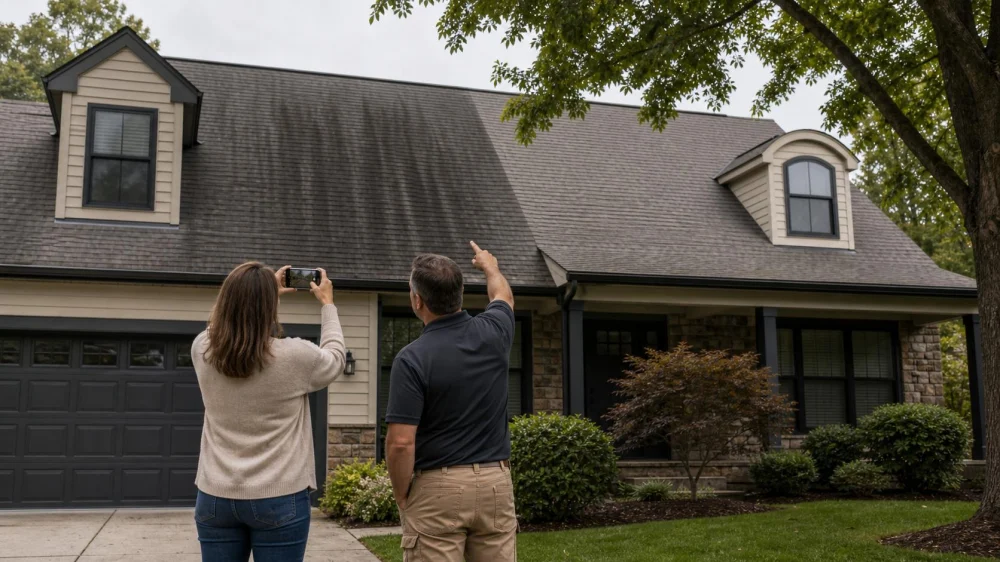
Dark roof streaks are often surface growth or runoff staining, but they can also mark debris retention, uneven drying, damaged shingles, or moisture around a roof feature. Do not diagnose by color alone or climb up to scrub. Photograph the pattern from the ground, compare it after dry weather, check indoors for leaks, and follow the roofing manufacturer’s cleaning guidance or obtain a professional assessment.
Absolute Roofing / absolute roofing
TimoniumBaltimore CountyMaryland
22 W Padonia Rd # B229, Timonium, MD 21093, USA
Common streak patterns
Long dark lines down an asphalt-shingle slope can develop where airborne growth spreads and rain carries residue. Local patches may form below trees, around debris, or where a roof remains shaded. A narrow mark below a metal feature can be runoff staining, while an irregular dark area beside a vent, wall, valley, or chimney may warrant closer inspection. Uniform color variation can also be part of the shingle blend rather than staining.

Gunner Roofing / gunner roofing
CromwellLower Connecticut River Valley Planning RegionConnecticut
700 Corporate Row, Cromwell, CT 06416, USA
How to observe safely
- Use binoculars or camera zoom from firm, dry ground.
- Take a wide photo showing the entire slope and close photos of the pattern.
- Note shade, overhanging branches, nearby vents, metal, valleys, and downspouts.
- Compare the appearance after several dry days and after rain.
- Check ceilings and safely accessible attic areas for stains or dampness.
- Record roof age, shingle product, prior cleaning, and when the streaks first appeared.
Algae versus moisture clues
Surface growth commonly spreads gradually and is more visible on shaded, moisture-retaining slopes. Dirt and organic debris often collect in predictable drainage paths. A leak is more concerning when exterior staining aligns with damaged shingles or a penetration and there are interior moisture signs. However, water can travel along decking or framing before appearing indoors. No single photo can reliably distinguish every cause.
Cleaning actions that can cause damage
Do not pressure-wash asphalt shingles, scrape them, apply an unknown chemical mix, or walk across the roof. Aggressive cleaning can remove protective granules, drive water under shingles, discolor materials, harm landscaping, and create a fall hazard. Mixing cleaning products can release dangerous fumes. Any treatment should match the roof manufacturer’s written instructions and include safe runoff, property, and worker protection.
When to call a professional
Request an inspection when streaks develop suddenly, stay wet longer than surrounding areas, accompany lifted or missing shingles, cluster around a penetration, or align with an indoor stain. Also seek advice before cleaning an older, steep, fragile, solar-equipped, or warranty-covered roof. Use urgent help for active water near electricity, a bulging ceiling, storm openings, or structural movement.
Documentation checklist
Collect dated ground photos, slope orientation, shade conditions, first-seen date, change over time, roof and warranty records, shingle product if known, previous cleaning details, nearby tree or metal features, recent storms, and interior observations. Ask a contractor to state the likely cause, affected material, cleaning or repair method, product compatibility, runoff controls, and expected result in writing.
Limits and safety notes
This general U.S. guidance cannot identify growth, contamination, or water entry from an image. Roof access, chemical handling, mould assessment, and leak tracing carry safety and health risks. Keep off steep, wet, hot, brittle, or damaged roofs. Follow local environmental rules, product labels, roofing manufacturer instructions, warranty terms, and qualified on-site findings.
Evidence notes
A useful evaluation considers pattern, slope orientation, shade, drying time, drainage, adjacent materials, roof age, surface condition, and interior moisture. Manufacturer maintenance documents are the primary reference for approved cleaning methods. Dated photos before and after comparable weather help show whether a stain is stable, spreading, or associated with wetting, but professional inspection may still be needed.
Frequently asked questions
Do dark streaks always mean the roof is leaking?
No. Many are surface staining or growth, but interior moisture or damaged roofing changes the concern.
Can I use a pressure washer?
Pressure washing can damage shingles and force water into the roof system. Follow the manufacturer’s approved method.
Will rain wash roof algae away?
Ordinary rain may move residue but usually does not correct established growth or its underlying conditions.
Are streaks only cosmetic?
Some are primarily visual, while debris, persistent moisture, or roof damage can require action. Confirm the cause first.
Should I install metal strips?
Compatibility, placement, runoff, roof warranty, and safe installation should be reviewed by the shingle manufacturer or a qualified roofer.
Next steps
Photograph the streaks from safe ground, note shade and weather, check for indoor moisture, and locate the roof manufacturer’s maintenance instructions. Avoid climbing, pressure washing, or applying an improvised solution. Arrange an inspection when the pattern is sudden, wet, damaged, near a penetration, or connected to any interior leak sign.
 KGA Construction LLC5.0 (1 reviews)
 Renner Roofing Inc.4.0 (125 reviews)
 Merrimack Valley Roofing & Gutter LLC5.0 (4 reviews)
 Power Roofing & Exteriors Bronx5.0 (35 reviews)
 Excel Construction Group4.0 (63 reviews)
 Salus Exteriors5.0 (13 reviews)
 How to Fix a Leak in a Roof Where Two Different Roof Pitches Meet
 How to Choose a Roof Color for a House with a Lot of White Trim
 Best Roofing Materials for a Home in a Heavy Rainfall Climate
 How Solar Panels Affect Your Roof – What You Need to Know
 Best Roofing Materials for Homes in Wildfire-Prone Areas: Top Class A Options
 How to Finance a New Roof Without Breaking the Bank