
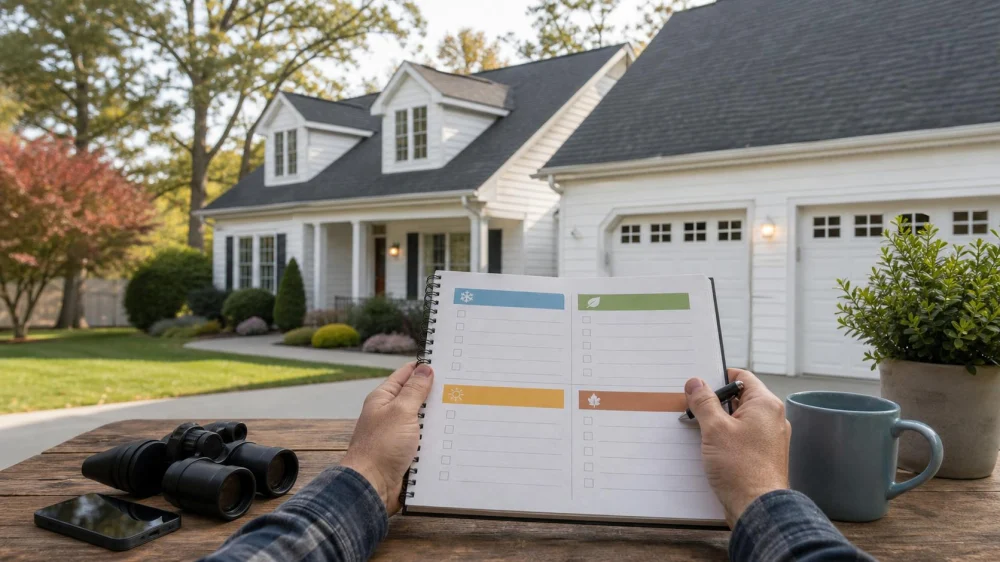
Seasonal Roof Maintenance Calendar for Homeowners
On this page
Quick answer
A seasonal roof maintenance calendar helps homeowners check roofs from the ground, watch gutters, document stains, trim risky branches, clear visible debris safely, and schedule professional inspections before small issues become leaks. Plan light checks in spring and fall, then monitor after major wind, hail, heavy rain, snow, or falling branches.

SB Pro Roofing / sb pro roofing
Pinellas ParkPinellas CountyFlorida
6358 49th St N, Pinellas Park, FL 33781, USA
Why a roof calendar helps
A seasonal roof maintenance calendar is a simple schedule for checking roof-related issues throughout the year without waiting for a leak.
Roofs age under sun, wind, rain, freeze-thaw cycles, branches, and clogged drainage. Regular observation helps homeowners spot change early and call a roofer when needed.
Victors Home Solutions / victors roofing
2722 E Michigan Ave suite 239, Lansing, MI 48912, USA
Spring and summer checks
In spring, look for winter damage from the ground: lifted shingles, gutter movement, debris, staining, and attic dampness. Spring is also a good time to review ventilation concerns before hot weather.
In summer, watch for heat-related wear, cracked sealants, overhanging branches, and storm damage after high winds or hail. Keep trees trimmed away from the roof when safe and appropriate.
Fall and winter checks
Fall is the main preparation season. Check gutters, downspouts, roof valleys, and nearby trees before leaves, snow, and ice create drainage problems.
In winter, do not climb onto the roof. Watch from the ground for ice buildup, heavy snow concerns, interior condensation, and new stains. If snow or ice looks unsafe, contact qualified help.
When to call a roofer
Call a roofer if you see missing shingles, active leaks, damaged flashing, sagging gutters, repeated granule loss, roofline sagging, or interior stains after storms.
This calendar is best for prevention, documentation, and planning. It is not ideal for roof walking, complex repairs, structural diagnosis, or emergency leak response.
Seasonal checklist
- Spring: ground-check shingles, gutters, flashing, and attic dampness.
- Summer: review branches, storm damage, ventilation clues, and sun wear.
- Fall: clear safe drainage areas and schedule needed repairs before winter.
- Winter: watch from the ground for ice, snow load concerns, and interior stains.
- After storms: photograph changes and check ceilings or attic spaces if safe.
- Every season: keep gutters, downspouts, and roof edges on your observation list.
Important notes
This article is general roofing maintenance guidance for homeowners in the United States. It does not replace professional inspection, safety training, building code requirements, or emergency services.
Do not climb onto steep, wet, icy, damaged, or unfamiliar roofs. Use ground observation and professional support when access is unsafe.
FAQ
How often should homeowners check a roof?
A simple ground check in spring and fall, plus after major storms, is a practical rhythm for many homes. Older roofs or tree-heavy lots may need closer attention.
What is the safest way to inspect a roof?
Start from the ground with binoculars or phone zoom. Check interior ceilings and attic access only if safe. Leave roof walking to qualified professionals.
Should gutters be part of roof maintenance?
Yes. Poor drainage can affect roof edges, siding, foundations, and leak risk. Gutters and downspouts are part of the roof system’s performance.
When should I schedule a professional inspection?
Schedule one after visible damage, recurring leaks, major storms, before major real estate decisions, or when the roof is aging and you need repair or replacement planning.
Evidence notes
This guide is based on common roof maintenance practices: seasonal observation, drainage checks, storm documentation, attic monitoring, tree management, and professional inspection when damage or unsafe access is possible.
Next steps
Add roof checks to your spring and fall home calendar. Keep photos in one folder so you can compare changes over time and share useful details with a roofer.


 Deschutes Roofing0.0 (0 reviews)
 McKinley Roofing Specialists1.0 (1 reviews)
 Peach State Roofing Inc.5.0 (1 reviews)
 Patriot Roofing and Restoration LLC0.0 (0 reviews)
 Golden Touch Roofing5.0 (39 reviews)
 Force Field Roofing LLC4.0 (64 reviews)
 Slate Roofing: The Ultimate Guide to Cost, Installation, and Maintenance
 How to Choose Between Architectural and 3-Tab Shingles
 The Difference Between Roof Repair and Roof Restoration: Which Do You Need?
 Can a Roof Be Repaired in Winter? What You Need to Know
 The Process of Installing a Slate Roof: The Gold Standard in Roofing Longevity
 How to Prevent Roof Leaks During Heavy Rain