
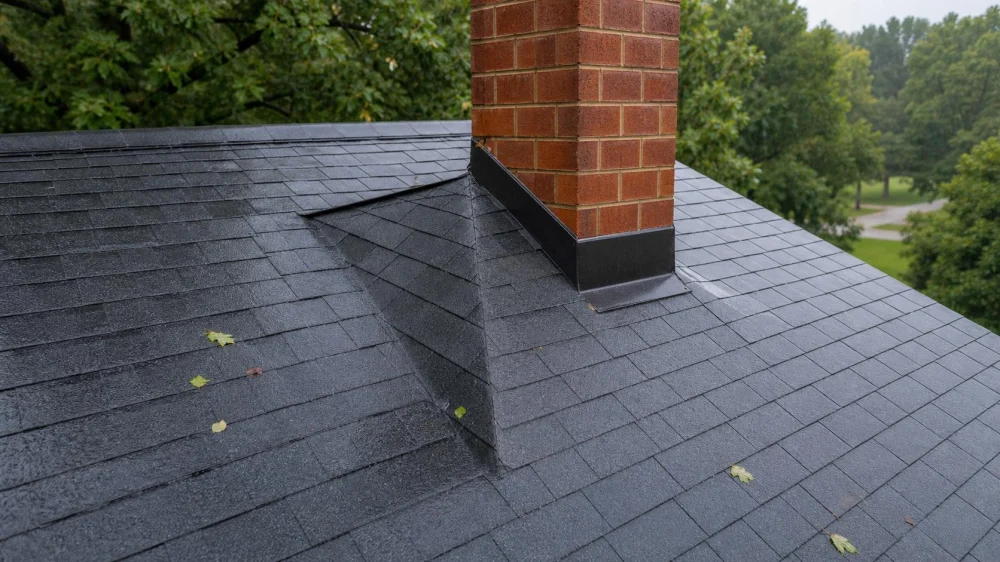
Roof Crickets: When a Chimney Needs Better Drainage
On this page
Quick answer
A roof cricket is a small raised structure built on the uphill side of a chimney or wide roof penetration to divide runoff and direct water around the obstruction. It may improve drainage where water, snow or debris collects, but it must be designed with the roof slope, chimney width, climate, materials and code requirements in mind. Stains or ponding call for a complete flashing and deck assessment, not a surface patch alone.

JK Contractors / jk roofing
West BendOzaukee CountyWisconsin
3058 County Rd Y, West Bend, WI 53095, USA
What a roof cricket is
A roof cricket, sometimes called a saddle, is a peaked or sloped drainage feature that sits behind a chimney or another wide obstruction. Its two sides send water toward adjacent roof channels instead of allowing runoff to strike and pool against the uphill wall.
A cricket is different from chimney flashing. Flashing creates layered water-shedding transitions between the roof and masonry; a cricket changes the path of drainage. A successful assembly may include both, along with underlayment, counterflashing and carefully detailed corners.
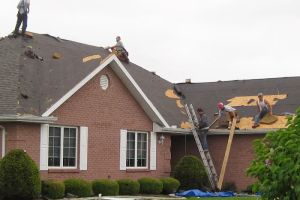
Lance Roofing & Siding Inc. / lance roofing and siding
6903 Dayton Springfield Rd, Enon, OH 45323, USA
When a cricket may be needed
Applicable building codes can require crickets or saddles behind chimneys above a specified width, with exceptions depending on roof slope or chimney location. Requirements vary across the United States, so a contractor should verify the locally adopted code rather than relying on a universal dimension.
Even where a cricket is not explicitly required, assessment may be useful when:
- a wide chimney interrupts a substantial flow of water;
- leaves, needles, snow or ice repeatedly collect behind it;
- the uphill flashing has recurring leaks or sealant repairs;
- staining, rot or soft decking appears near the chimney;
- the roof slope or intersecting planes concentrate drainage there;
- a reroof creates access to correct an older vulnerable detail.
Best for: redirecting concentrated runoff around a broad obstruction when properly integrated into the roof. Not ideal as a stand-alone fix: active masonry leaks, failed counterflashing, damaged deck, condensation or water entering through an uncapped flue.
Safe ground-level checklist
- Use zoom from the ground. Photograph the uphill side and both chimney corners without climbing.
- Look after rain. From a safe location, note slow drainage, debris dams or runoff forced against masonry.
- Check the flashing outline. Look for lifted metal, open joints, excessive exposed sealant or displaced shingles.
- Observe the masonry. Note cracked caps, open mortar joints, dark staining or efflorescence.
- Inspect accessible interior areas. Check attic framing and ceilings near the chimney for stains, dampness or mould-like growth.
- Record conditions. Date photos and note wind direction, rainfall, snowmelt and fireplace use when symptoms occur.
- Arrange urgent help when needed. Active water near wiring, sagging material or falling masonry requires prompt professional attention.
Do not step behind a chimney to inspect a hidden area. Roof slope, loose granules, wet metal and limited escape space make this a high-risk location.
Important design and installation details
- Geometry: cricket slope and ridge layout must divide water without creating a low pocket at either corner.
- Deck support: framing and sheathing should provide a sound base and accommodate the existing structure.
- Water-shedding layers: underlayment, shingles or membrane and metal flashing must overlap in drainage order.
- Counterflashing: the upper flashing interface should be appropriately integrated with masonry, not merely face-sealed as the primary defense.
- Corner transitions: the cricket-to-chimney and cricket-to-roof intersections require careful fabrication.
- Material compatibility: metals, fasteners, sealants, masonry and roof covering must be compatible.
- Serviceability: the final shape should reduce debris traps and allow safe professional maintenance.
Low-slope membranes, asphalt shingles, tile, metal and wood roofs require different detailing. A diagram or method suitable for one system should not be copied onto another.
Repair options and decision rules
Flashing repair
When drainage is adequate and deterioration is limited, correctly rebuilding step, apron or counterflashing may address the defect. Repeated caulk-only repairs usually do not correct failed layering.
Add or rebuild a cricket
A contractor may frame or form a cricket, install a suitable deck or substrate, integrate underlayment and flashing, and replace disturbed roof covering. This is often easiest during reroofing, but active leakage may justify earlier work.
Masonry or cap repair
If water enters through the chimney cap, crown, joints or porous masonry, a mason or chimney specialist may be needed. A roof cricket cannot correct every chimney moisture source.
Broader roof work
Widespread brittle shingles, rotten decking or several failing penetrations may make isolated work impractical. Ask for separate findings so the scope is tied to observed conditions.
Questions to ask a contractor
- Where is water most likely entering, and what evidence supports that conclusion?
- Does the locally adopted code require a cricket for this chimney?
- What slope and drainage path will the proposed cricket create?
- How will underlayment, flashing and counterflashing be integrated?
- Will any damaged decking, framing or masonry be included or priced separately?
- Are materials compatible with the existing roof and chimney?
- What photographs will document concealed conditions and completed layers?
- What workmanship terms apply to this transition?
Compare written scopes, current credentials required in your jurisdiction, insurance documentation and inspection evidence. A contractor directory can help identify candidates, but it is not a substitute for independent verification.
Limitations, evidence and safety notes
This is general building-envelope guidance, not a project design or code determination. Code editions, amendments, snow loads, wildfire requirements and manufacturer details vary by location and product. A qualified local roofer should inspect the assembly; masonry, structural or chimney professionals may also be necessary.
Do not use a fireplace or appliance if water may have affected the flue, liner or nearby electrical components until an appropriate professional confirms safe operation. Keep people away from loose masonry and wet ceiling material.
Frequently asked questions
Is a roof cricket the same as flashing?
No. The cricket redirects runoff, while flashing seals and sheds water at the roof-to-chimney transition. They work together but perform different jobs.
Can a cricket stop every chimney leak?
No. Leaks may originate in flashing, masonry, the chimney crown, a cap, condensation or nearby roof defects. Diagnosis should identify the actual path.
Can a cricket be added without replacing the roof?
Often yes, but surrounding covering must be removed and reinstated. Feasibility depends on roof condition, matching materials and access to sound decking.
Why does debris collect behind my chimney?
The chimney interrupts downhill flow and creates a sheltered low area. Roof geometry, nearby trees and an undersized or missing drainage saddle can contribute.
Should the cricket be metal or shingled?
The answer depends on slope, size, roof system, climate and detailing. Some are roof-covered assemblies; others use sheet metal or membrane. Compatibility and drainage are more important than appearance alone.
Next steps
Photograph the chimney from safe ground, note where debris or water gathers and document any interior staining. Request an inspection that separates roof-covering, flashing, cricket and masonry findings. Use the written diagnosis and locally applicable requirements to compare repair scopes before approving work.

 EP Roofing LLC4.0 (59 reviews)
 Harbor Roofing and Contracting, Inc.3.0 (15 reviews)
 RUMI ROOFING LLC5.0 (4 reviews)
 H3 Roofing5.0 (5 reviews)
 M. Pierce Roofing, Inc.5.0 (5 reviews)
 Roofing By Dimoski Homes0.0 (0 reviews)
 How to Seal a Plastic Pipe Vent That is Leaking | Roofing Boot Explained
 Signs Your Roof Deck Is Sagging and How to Address It | Pro Found Roofing
 Residential vs Commercial Roofing: What’s Best for Your Property?
 Roof Replacement Timeline: Step-by-Step Process Explained
 Roof Replacement ROI: How a New Roof Can Increase Home Value
 How to Safely Remove Moss and Algae from Your Roof - Step-by-Step Guide