
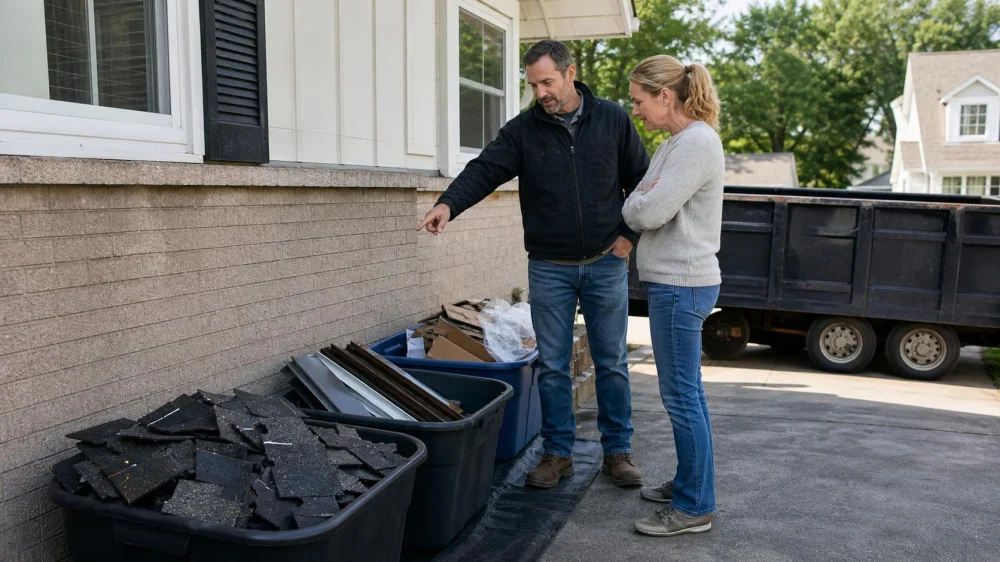
Roofing Waste Plan: Sort, Remove, and Document Debris
On this page
Quick answer
Before roof work, ask the contractor where old shingles, metal flashing, wood, membranes, fasteners, packaging, and hazardous or unknown materials will go. Confirm container size and location, driveway protection, prohibited loads, recycling claims, transport responsibility, disposal fees, daily nail pickup, and final receipts. Keep waste controlled from roof to container, and do not let homeowners sort sharp, dusty, mouldy, or suspect material themselves.
Victors Home Solutions / victors roofing
2722 E Michigan Ave suite 239, Lansing, MI 48912, USA
Identify waste streams
A roofing waste plan defines how removed materials and job packaging are contained, separated, transported, recycled, or disposed of. The plan should match the actual roof system and local facility rules.
Estimate existing layers and likely deck replacement, but treat quantities as provisional until tear-off. Ask which materials can be recycled locally and whether they must be clean and separated. “Recyclable” does not prove the chosen facility accepts the load.

Gunner Roofing / gunner roofing
CromwellLower Connecticut River Valley Planning RegionConnecticut
700 Corporate Row, Cromwell, CT 06416, USA
Plan containers and access
Choose a container location that protects driveways, underground services, drainage, doors, sightlines, neighbours, and emergency routes. Confirm delivery and pickup dimensions, weight limits, street or permit requirements, protective boards, door swing, and overflow process.
Workers should use controlled chutes, tarps, or handling methods. Keep people, pets, vehicles, and landscaping out of drop zones. Cover or secure light material so wind cannot carry packaging or underlayment.
Separate hazardous material
Older roofs and related components can contain asbestos, lead, treated wood, contaminated insulation, mould, animal waste, sharp metal, or other regulated material. Stop ordinary handling when suspect material appears and use qualified testing, containment, transport, and disposal as required.
Do not sweep, break, burn, pressure-wash, or place unknown suspect material into a general debris container. The contractor should document who controls the specialised process and how the schedule changes.
Clean and document
Define daily cleanup for walkways, entrances, neighbouring edges, gutters, and public areas. Magnetic pickup can help find ferrous nails but cannot capture every sharp object or nonmagnetic fastener. Combine it with visual inspection and controlled tear-off.
At closeout, inspect from safe ground, check accessible attic and interior areas for debris or openings, and record container removal, driveway condition, leftover materials, disposal or recycling tickets, and final cleanup. Keep children and pets away until completion is confirmed.
Waste-plan checklist
- Expected materials and quantities.
- Reuse, recycling, disposal, and prohibited loads.
- Container size, location, protection, and permits.
- Drop-zone and wind control.
- Hazardous-material stop process.
- Daily nail and debris pickup.
- Final inspection, tickets, and property photos.
Limitations and notes
Waste, recycling, hazardous-material, transport, and permit rules vary by US state and local facility. Use current official requirements and qualified professionals. Homeowners should not climb roofs, enter active drop zones, or handle suspect debris.
FAQ
Can old asphalt shingles be recycled?
Sometimes, depending on local facilities, material condition, and contamination. Verify the actual destination.
Who pays disposal fees?
The written scope should state container, weight, overage, special handling, and permits.
Does magnetic cleanup find every nail?
No. Visual inspection and controlled work practices are also required.
Can leftover new shingles stay with the owner?
Ask the contract to state ownership, storage, labels, colour batch, and warranty information.
Evidence notes
This guide reflects common construction waste practice: source identification, controlled containment, verified facilities, hazardous-material separation, daily cleanup, and documented closeout. It does not certify recycling or disposal compliance.
Next steps
Add a waste schedule to the roofing scope with container details, accepted materials, special-hazard process, cleanup frequency, and required disposal or recycling records.



 Alvarez Alvarez ROOFING inc5.0 (7 reviews)
 North Contracting & Roofing4.0 (22 reviews)
 D & R Roofing Inc4.0 (136 reviews)
 Omega Roofing4.0 (15 reviews)
 Low Price Roofing5.0 (58 reviews)
 Baker Home Exteriors4.0 (638 reviews)
 How to Install Drip Edge on Rakes and Eaves for Complete Water Management
 Understanding Roofing Ventilation Systems and Why They Matter
 The Environmental Impact of Your Roofing Choices
 Can a Roof Be Repaired in Winter? What You Need to Know
 Storm-Damage Roofing Offers: Pause Before You Sign
 Understanding Roofing Warranties: Material vs. System Warranties Explained