
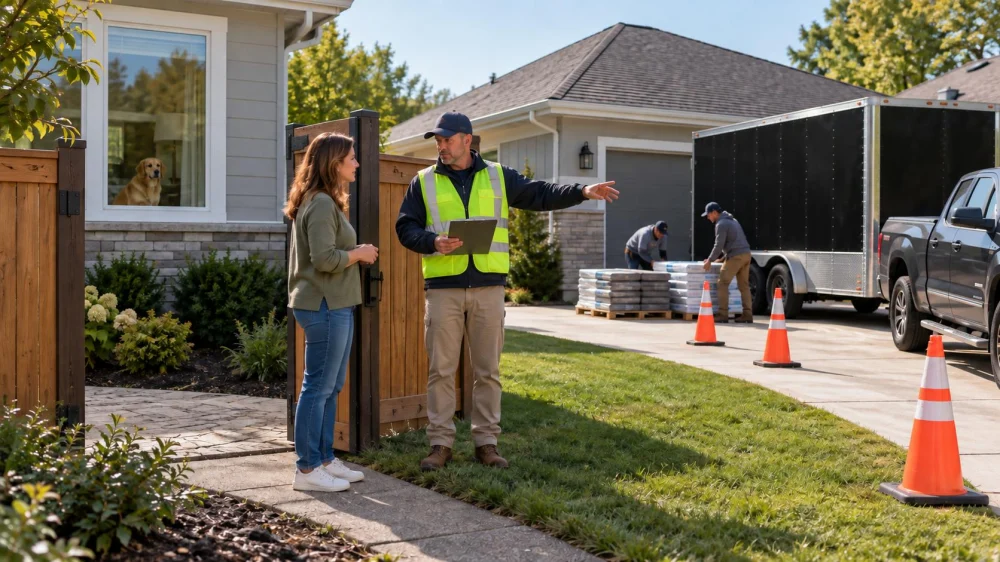
Roofing Crew Access: Gates, Pets, and Daily Lockup
On this page
- Quick answer
- Map the access route
- Separate parking from loading
- Control gates, keys, and codes
- Keep people and pets out of the work zone
- Agree on facilities and utilities
- Set a daily opening routine
- Use a written lockup checklist
- Prepare for delays and emergencies
- Limits and important notes
- Frequently asked questions
- Sources and evidence notes
- Conclusion and next steps
Quick answer
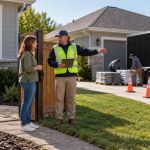
Before roofing starts, walk the property at ground level with the contractor and agree on crew entry, gates, parking, material delivery, dumpster placement, power and water use, toilet arrangements, and restricted areas. Keep children and pets indoors or off-site, remove vehicles and fragile items, and share only necessary access codes. Name daily contacts, opening and closing times, weather procedures, and who verifies gates, tools, debris, temporary protection, and building security at lockup.

JK Contractors / jk roofing
West BendOzaukee CountyWisconsin
3058 County Rd Y, West Bend, WI 53095, USA
Map the access route
Identify the street approach, driveway limits, gate width, overhead branches or wires, soft ground, irrigation, septic components, retaining walls, and tight turns. The route for a pickup may not support a dump truck, crane, trailer, or material delivery.
Ask the contractor to mark approved paths and no-go zones on a simple site plan. Confirm any permits, building-management rules, or neighbour access agreements before equipment arrives.

Rapid Response Roofing / rapid response roofing
East GreenvilleMontgomery CountyPennsylvania
408 State St, East Greenville, PA 18041, USA
Separate parking from loading
Reserve space for deliveries, waste handling, and emergency access rather than filling the entire driveway with crew vehicles. Move household vehicles before work so falling debris, dust, or blocked gates do not trap them.
Confirm street restrictions and protect sidewalks without creating an accessibility barrier. Never direct vehicles onto lawns, covers, or unknown underground structures.
Control gates, keys, and codes
- Decide which gate will be used and whether it stays open during work.
- Provide temporary codes rather than permanent credentials where possible.
- Record who receives keys or remotes and when they are returned.
- Keep unrelated doors and rooms locked.
- Tell the supervisor about alarms, automatic gates, cameras, and scheduled service visits.
- Change temporary access after the project if appropriate.
Keep people and pets out of the work zone
Roofing creates noise, vibration, falling-debris risk, open gates, sharp fasteners, moving vehicles, and unfamiliar workers. Keep children, visitors, and pets inside a protected area or at another location during active work.
Do not rely on a yard fence if gates must remain open. Plan pet toilet and exercise times with the supervisor, use a leash outside, and inspect the area for nails and debris before normal access resumes.
Agree on facilities and utilities
Specify whether the crew may use exterior power, water, outlets, and toilets, and who supplies cords, hose protection, and portable facilities. Identify shutoffs and sensitive circuits without inviting unauthorized electrical work.
Discuss smoking, waste, music, break areas, and indoor access in the contract or pre-start meeting. Clear rules protect privacy and reduce daily misunderstandings.
Set a daily opening routine
- Confirm the supervisor and homeowner contact.
- Check weather and start-time changes.
- Move people, pets, and vehicles to planned locations.
- Unlock only approved access points.
- Verify temporary protection and delivery space.
- Report new interior leaks, alarms, or property conditions before work resumes.
Use a written lockup checklist
At day's end, the supervisor should account for workers, secure ladders and equipment, remove or contain debris, sweep accessible paths, close gates, protect exposed roofing, and check weather readiness. The homeowner can verify doors, pets, vehicles, alarms, and obvious interior changes from safe areas.
Do not enter fenced or overhead work zones to inspect. Report concerns to the supervisor and document them with photos from an approved location.
Prepare for delays and emergencies
Exchange primary and backup contacts and define when the contractor may secure the property without the owner present. Plan for rain, high wind, heat, fire alarms, utility interruption, medical events, material theft, and after-hours leaks.
Keep emergency services access open. For an immediate danger, call emergency services first, then the project contacts.
Limits and important notes
Access planning does not transfer the contractor's responsibility for jobsite safety, worker supervision, equipment, fall protection, or compliance. Homeowners should not direct roofing methods or enter controlled work zones.
This is general US project-planning guidance. The contract, site-specific safety plan, local rules, insurer, property association, utility requirements, and qualified contractor govern a particular project.
Frequently asked questions
Should I give the crew a house key?
Only if indoor access is necessary and documented. Prefer limited temporary access, name authorized people, and track return.
Can my dog stay in the backyard?
Not in or beside an active roofing zone. Noise, open gates, debris, and moving vehicles make secure indoor or off-site care safer.
Who checks for nails each day?
Put cleanup responsibility and methods in the contract. The crew should perform daily cleanup, while the homeowner reports accessible concerns without entering the work zone.
Sources and evidence notes
This article applies general residential construction access, work-zone separation, pet safety, property security, communication, and daily closeout principles. The contractor's site plan, contract, applicable safety rules, local requirements, and actual property conditions control the project.
Conclusion and next steps
Walk the site before delivery day and record access, parking, gates, utilities, restricted areas, and contacts. Relocate pets and vehicles before the crew arrives. Use a short opening and lockup checklist so each workday begins with clear access and ends with a secure property.


 Roofing Company Near Me Deerfield Beach5.0 (33 reviews)
 FRG Construction And Developers Inc.4.0 (14 reviews)
 DBS Roofing and General Contractors4.0 (50 reviews)
 Friendly Roofing5.0 (13 reviews)
 Expert Team Roofers5.0 (1 reviews)
 Greene’s Professional Roofing Services Boca Raton4.0 (45 reviews)
 Roofing Crew Access: Gates, Pets, and Daily Lockup
 Roof Nail Pops: Document Clues Before a Contractor Visit
 Roof Debris After Wind: Record Clues Without Climbing
 Roof Sealant Claims: Separate a Patch From a Lasting Repair
 Fascia and Soffit Repair: Define the Roofing Scope
 Attic Ventilation and Roofing: Calculate Before You Change It