
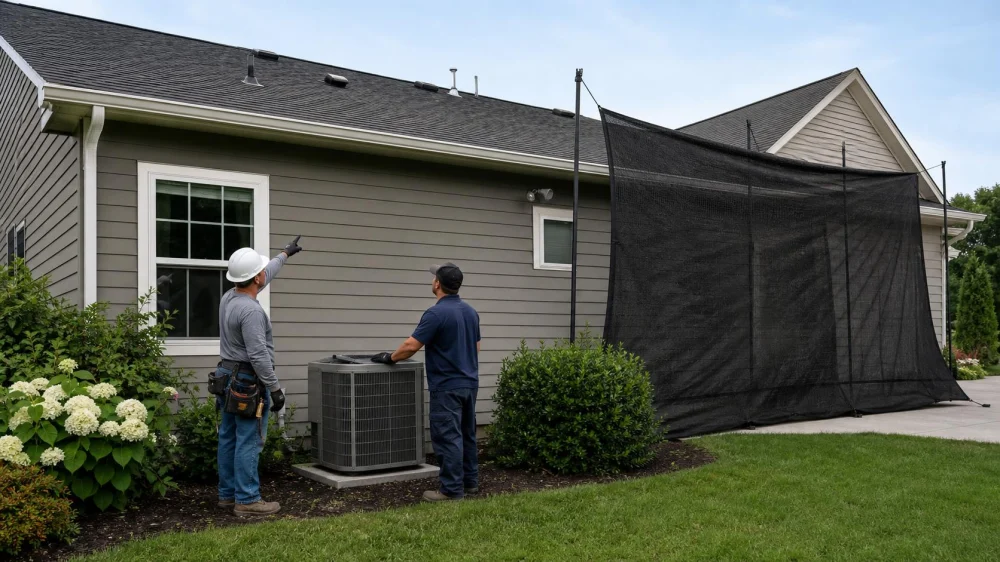
Roofing Work Near HVAC Equipment: Protect Airflow and Access
Roof replacement sends dust, granules, fasteners, packaging, and foot traffic around a home. Outdoor HVAC equipment, roof penetrations, intake and exhaust openings, and service clearances can all be affected. Coordination between the roofer and an HVAC professional helps protect equipment without creating an unsafe cover, blocked vent, or warranty conflict.
Map the Equipment
Identify outdoor condensers, heat pumps, rooftop units, mini-split lines, furnace and water-heater vents, fresh-air intakes, dryer exhaust, and controls. Photograph their condition and location before work. Tell the roofer which devices may start automatically. A piece of equipment that looks inactive may still operate on a thermostat, timer, freeze protection, or remote command.

Holden Roofing (Houston Corporate) / holden roofing
RosenbergFort Bend CountyTexas
2128 1st St, Rosenberg, TX 77471, USA
Review Requirements
Check equipment installation instructions, service clearances, and warranties with qualified contractors. Roofing product instructions may also control flashing and underlayment around penetrations. Do not assume the roofer is authorized to disconnect refrigerant, gas, electrical, or combustion equipment. Define where a licensed HVAC, electrical, plumbing, or gas professional is needed and who schedules that work.

JK Contractors / jk roofing
West BendOzaukee CountyWisconsin
3058 County Rd Y, West Bend, WI 53095, USA
Plan Any Shutdown
If equipment must be shut down, agree who does it, when, and how indoor temperature will be managed. Consider older adults, infants, medical needs, pets, humidity, freezing conditions, and refrigerated supplies. Turning off a thermostat may not fully isolate power. Lockout and electrical work belong to qualified people following applicable safety rules.
Use Covers Safely
A cover can keep falling debris out only when the equipment is off and the covering method is approved. Never wrap or block operating equipment, combustion air, flues, or exhaust. Trapped heat or gases can create serious hazards. The project plan should name who installs, monitors, and removes protection so a covered unit is not restarted by someone unaware.
Preserve Clearances
Keep pallets, bins, ladders, vehicles, and discarded shingles away from required airflow and service zones. Protect line sets and control wiring from impact without bending or enclosing them improperly. Maintain clear routes for emergency shutoff and HVAC service. Temporary protection should be stable and visible, not a loose sheet that can blow into a fan or walkway.
Coordinate Roof Penetrations
Roof curbs, vent pipes, flues, and lines need compatible flashing and correct height. A reroof can reveal corrosion, poor prior work, or a penetration that no longer serves equipment. Do not simply roof around an abandoned opening. Have qualified trades decide whether it stays, moves, or is removed, and document responsibility for sealing both the roof and system.
Control Debris
Use ground tarps, magnetic cleanup where appropriate, controlled tear-off, and designated chutes or bins to keep debris away from HVAC equipment. Tarps should not direct water into units or restrict ventilation. The crew should inspect protection throughout the day, especially after wind. Homeowners should observe from a safe area and report, not reach into, equipment.
Protect Indoor Air
Roofing odours and dust may enter through open windows, fresh-air intakes, attic leaks, or poorly sealed ducts. Discuss whether windows should close and whether ventilation settings should change during certain work. People with respiratory sensitivities may need another location. Never block required combustion ventilation or improvise filter changes contrary to equipment guidance.
Inspect Before Restart
Before equipment returns to service, remove approved covers and inspect for fasteners, granules, dents, disconnected wires, damaged fins, blocked drains, or altered vents. The responsible qualified person should perform the restart when the scope requires it. Stop and call for service if there is unusual sound, smell, vibration, leaking, tripped protection, or failure to operate normally.
Keep Final Records
Collect before-and-after photos, roofing details at penetrations, HVAC service notes, model information, warranties, and paid invoices. Record any temporary shutdown and final test. If damage is alleged, preserve evidence and notify the contractor promptly. Future roof and HVAC technicians benefit from knowing what was moved, flashed, replaced, or intentionally left unchanged.
Build the coordination into the schedule rather than calling the HVAC company after tear-off begins. Give each trade the other supervisor’s contact information and identify the moment when a penetration, curb, or unit must be inspected. Agree who protects the opening overnight if work spans days. If weather changes the roof sequence, confirm that shutdown and restart appointments still match. Homeowners should not bridge a gap between trades by reconnecting equipment or covering an exposed opening themselves.
After the first full heating or cooling cycle, walk the exterior from the ground and listen for new vibration or contact. Check indoor comfort, thermostat alerts, visible condensate, and normal airflow. These observations do not replace professional testing, but they can reveal a problem promptly. Report concerns to both contractors in writing so responsibility is evaluated from evidence instead of assumptions.
HVAC protection during roofing requires more than tossing a tarp over a unit. Map every opening and device, assign qualified trades, control shutdowns, preserve airflow and service clearance, remove debris, and inspect before restart. Written coordination keeps two building systems from working against each other.

 Tru-Ridge Roofing LLC5.0 (7 reviews)
 North Miami Beach Celestia Crest Roofing Contractors5.0 (2 reviews)
 Hive Roofing5.0 (73 reviews)
 American Roofing Doylestown5.0 (1 reviews)
 Smarter Construction5.0 (3 reviews)
 Polar Edge Roof Co.5.0 (6 reviews)
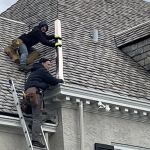 How to Fix a Leak in a Roof Where Two Different Roof Pitches Meet
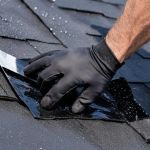 How to Fix a Leak in a Flat Roof with a Liquid Rubber Sealant
 Should You Repair or Replace Your Roof? A Complete Decision Guide
 How to Clean Moss Off a Roof Without Damaging the Shingles or the Environment
 What Is Synthetic Roofing Underlayment?
 Roof Decking Repair: How to Know When It's Needed