
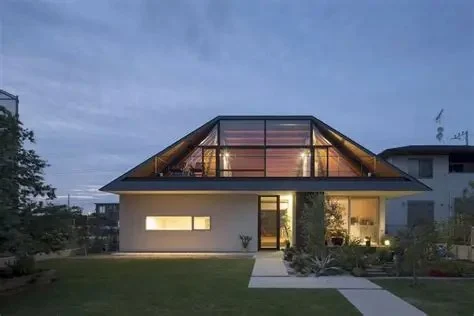
What is a Roofing Square? How to Calculate the Area of a Hip Roof
- 1. Understanding What a Roofing Square Is
- 2. The Importance of Accurate Roof Measurement
- 3. How to Calculate the Area of a Hip Roof
- 4. Real-Life Example: Calculating Roof Area for a Hip Roof
- 5. How Pro Found Roofing Can Help
A "roofing square" is a unit of measurement used in the roofing industry to determine how much material is needed for a roof. One roofing square equals 100 square feet of roof area. The roofing square is a convenient way for contractors to estimate the number of roofing materials, such as shingles or tiles, required to cover a specific area of a roof. It simplifies the calculation and ensures that roofing material costs are accurately estimated, allowing for better budgeting and planning.
Accurate roof measurement is critical in both roof installation and repair. Misjudging the size of a roof can lead to overestimating or underestimating the materials needed, which can result in wasted money or incomplete work. Knowing how to calculate the area of your roof, particularly for complex roof types like hip roofs, ensures that you can order the right amount of materials, avoid delays, and keep your roofing project on track. It’s essential to measure carefully to avoid costly mistakes.
Calculating the area of a hip roof requires more than just measuring the length and width of the house. A hip roof has four sloped sides, and the area must include both the length and width of each slope. Here’s how you can calculate the area of a hip roof:
- Step 1: Measure the Length and Width of the House
Start by measuring the length and width of the house at its base. These are the dimensions of the home’s footprint, and they will help you estimate the base area of the roof. - Step 2: Measure the Rise of the Roof
The rise of the roof is the vertical height from the base to the peak. Measure this carefully, as it will affect the pitch of the roof. - Step 3: Calculate the Slope of the Roof
The slope is the angle of the roof’s incline, and it can be calculated using the Pythagorean theorem (a² + b² = c²). Use this formula to determine the length of the sloped side of the roof (also known as the "rafter length"). - Step 4: Multiply to Find the Area of One Side
Multiply the rafter length by the width of the house to get the area of one side of the hip roof. Since a hip roof has four sloped sides, multiply this result by four to get the total area. - Step 5: Convert to Roofing Squares
Divide the total roof area by 100 to convert the measurement to roofing squares. This will give you the number of roofing squares needed to cover the roof.
Let’s consider an example: Suppose you have a hip roof with a house footprint of 30 feet by 40 feet. The rise of the roof is 10 feet, and the slope of the roof is calculated to be 45 degrees. After calculating the rafter length and multiplying by the width of the house, you determine that the total roof area is 2,400 square feet. Dividing by 100 gives you 24 roofing squares. This means you’ll need 24 squares of roofing material to cover the entire roof.This real-life example demonstrates how to break down the calculation of a hip roof and highlights the importance of accurate measurements in ensuring that you purchase the right amount of materials.
If you need help calculating the area of your roof or finding the right materials for your project, visit Pro Found Roofing. Our team of experts is available to guide you through the roof measurement process and help you order the right amount of roofing materials. Whether you’re working on a simple roof or a more complex design like a hip roof, Pro Found Roofing has the experience and resources to ensure that your roofing project is a success.


 R.V.E. Exteriors4.0 (28 reviews)
 CentiMark Corporation4.0 (22 reviews)
 WeatherTech Roofing4.0 (28 reviews)
 NW Precision Roofing5.0 (102 reviews)
 Bluegrass Roofing and Consulting5.0 (134 reviews)
 Vinton Roofing Company Inc4.0 (372 reviews)
 How to Choose the Best Roof Color for Energy Efficiency
 10 Essential Roofing Maintenance Tips Every Homeowner Should Know
 DIY Roof Repair Tips: What U.S. Homeowners Can Safely Handle Themselves
 Green Roofs: How They Work, Benefits, and Installation Considerations for Your Home
 How to Inspect Your Roof from the Ground: A Simple Guide for Homeowners
 The Benefits of a Stone-Coated Steel Roof: The Look of Shake with Metal Durability