

Roof and Gutter Replacement: Sequence the Work in One Scope
On this page
Quick answer
When a roof and gutters both need replacement, put them in one coordinated scope even if different contractors do the work. Document fascia, soffit, roof deck edge, drip edge, underlayment, starter course, gutter hangers, apron, downspouts, discharge, paint, rot, and access before demolition. Assign who removes, temporarily protects, repairs, installs, tests, cleans, and warranties every shared detail.

SB Pro Roofing / sb pro roofing
Pinellas ParkPinellas CountyFlorida
6358 49th St N, Pinellas Park, FL 33781, USA
Document the existing edge
From the ground and available records, photograph each eave, rake, corner, downspout, fascia joint, overflow stain, damaged soffit, splash area, and roof-to-wall transition. Ask the contractor to inspect concealed wood during tear-off and use a written unit price or change-order method for damaged fascia or deck edge.
- Gutter dimensions, profile, material, colour, seams, and hanger spacing
- Roof slope, edge condition, current drip edge, and shingle overhang
- Downspout size, route, extensions, underground connections, and discharge point
- Leaf guards, heat cable, rain barrels, diverters, and other attachments
- Doors, gates, landscaping, decks, utilities, and neighbour areas below the work
Agree on the sequence
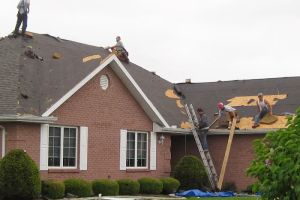
- Protect property and create safe access and fall-protection zones.
- Remove gutters only when necessary and preserve drainage if weather interrupts work.
- Tear off roofing and inspect deck, fascia, soffit, and edge framing.
- Approve written repairs before covering concealed conditions.
- Install underlayment, edge metal, flashing, starter, and roof covering in the specified order.
- Install gutters and hangers without compromising new edge details.
- Connect and test downspouts, extensions, guards, and drainage.
- Complete magnetic and visual cleanup, photos, water testing, and documents.
The exact sequence depends on the roof and gutter system. Require both trades to approve the interface instead of assuming the other contractor will adapt in the field.
Lance Roofing & Siding Inc. / lance roofing and siding
6903 Dayton Springfield Rd, Enon, OH 45323, USA
Write the shared details
- Who owns measurements and compatibility
- Drip-edge type, location relative to underlayment, colour, and overlap
- Shingle or metal projection at the eave
- Gutter elevation, slope, hanger method, and fastener substrate
- How fascia damage and painting are priced
- Temporary rain protection between trades
- Downspout discharge and underground drain verification
- Who repairs damage caused by removal or installation
- How workmanship warranties interact
Do not allow gutter fasteners to be placed through a roof surface or flashing unless the approved system detail specifically requires and seals that connection.
Inspect at closeout
Stay on the ground while the contractor provides close photos of edge metal, starter, corners, seams, end caps, outlets, hangers, fascia, and concealed repairs. During a controlled test, observe that water enters the gutter, flows to outlets, and discharges away from the foundation without leaking behind the gutter or overflowing at ordinary flow.
Confirm doors and gates work, outlets are not crushed, guards are secured, paint is complete, fasteners and sharp metal are removed, and warranties and product data match the installation.
Coordination checklist
- Roof and gutter conditions photographed
- One drawing shows edge and drainage details
- Trade sequence and weather protection assigned
- Wood repair pricing and approval process written
- Materials, colours, fasteners, and hanger details confirmed
- Downspout destinations and underground drains checked
- Damage responsibility and warranties reconciled
- Close photos, water test, cleanup, and records required
Limitations
Edge details vary with roof material, slope, climate, code, manufacturer, and existing construction. Water tests cannot reproduce every storm or diagnose underground drainage. This guide is for project coordination, not installation instructions or code approval.
FAQ
Should gutters come off before reroofing?
Sometimes, but not always. The contractor should decide from the edge detail, access, gutter condition, and protection plan.
Can one contractor handle both?
Yes if the scope, qualifications, permits, coverage, and warranties are clear. Coordination still needs written details.
Who repairs rotten fascia?
Name the responsible contractor and unit price before demolition.
Should downspouts connect to buried pipe?
Only after the connection and destination are identified and the system is suitable and clear.
Can I test with a garden hose?
Have the contractor perform a controlled test without climbing or forcing water under roof edges.
Evidence notes
The controlling evidence should be the roof and gutter manufacturers' current installation details, local building requirements, approved project drawings, written trade scopes, and before-and-after photos. OSHA guidance confirms roofing and weatherproofing require planned fall protection, trained workers, and appropriate equipment.
Conclusion
The roof edge belongs to both systems. Coordinate demolition, concealed repairs, drip edge, gutter hangers, downspouts, weather protection, and warranties before work starts, then close the job with photos and a drainage test.



 IBEX Roof5.0 (102 reviews)
 The Roofing Experts Lennox4.0 (52 reviews)
 Hands On Roofing Co4.0 (22 reviews)
 JLQ Roofing and Siding4.0 (23 reviews)
 Thomas Krum Consulting3.0 (3 reviews)
 T & L Roofing Experts LLC5.0 (21 reviews)
 What is a Roofing Warranty? Understanding Manufacturer vs. Contractor Warranties
 Roofing Contractor's Liability Insurance: Why It’s Crucial for Your Protection
 The Best Ventilation Systems for a Hot Attic: Reducing Heat Buildup in Summer
 What is a Roofing Cricket? How to Frame a Cricket for a Skylight
 How to Install Step Flashing on a Roof to Wall Intersection
 How to Get a Detailed Roofing Quote That Includes All Labor and Materials