
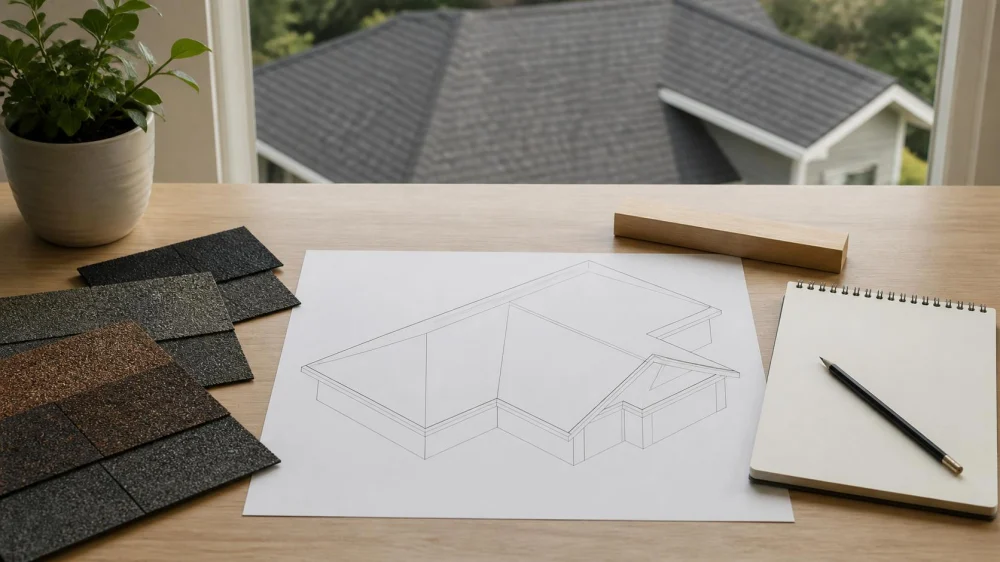
Roofing Estimate Measurements: Squares, Waste, and Existing Layers
On this page
Quick answer
In U.S. roofing estimates, one roofing square commonly represents 100 square feet of roof surface. The contractor starts with measured roof area, then accounts for the roof's slopes, dormers, valleys, hips, penetrations, starter and ridge materials, cutting waste, and product packaging. Existing layers, tear-off, disposal, and damaged decking should be shown separately or clearly included. Compare proposals only after confirming that each uses the same roof sections and scope.
A higher square quantity is not automatically an error, and a lower number is not automatically a bargain. Ask the estimator to explain the measurement report and assumptions in writing.
Victors Home Solutions / victors roofing
2722 E Michigan Ave suite 239, Lansing, MI 48912, USA
Understand a roofing square
A square is a purchasing and estimating unit, not necessarily one visible package or one exact installed area after cutting. Bundles per square vary by shingle product, and other roofing systems use different package sizes or coverage rules.
- Ask for total measured roof area before waste.
- Ask for the order quantity after waste and accessory needs.
- Confirm whether ridge cap and starter materials are counted separately.
- Check that product coverage matches the specified brand and profile.
Separate roof area from floor area
The footprint or living area of a house is not the roof surface area. Slope increases surface area, and overhangs, attached garages, porches, additions, and multiple roof levels change the total. Complex geometry also creates more cuts and labour even when two homes have similar floor area.
Measurements may come from field work, aerial imagery, plans, or a combination. Ask which method was used and whether every roof section is included.

Holden Roofing (Houston Corporate) / holden roofing
RosenbergFort Bend CountyTexas
2128 1st St, Rosenberg, TX 77471, USA
Ask how waste is calculated
Waste covers necessary cuts, unusable offcuts, breakage, pattern alignment, and a practical amount of spare material. The appropriate allowance varies with roof shape, product, installation method, and contractor process. Simple gable roofs and roofs with many valleys, hips, dormers, and small planes should not be assumed to need the same allowance.
Request the waste assumption rather than applying a universal percentage. Also ask what happens to unopened material and whether matching spare shingles remain with the homeowner.
Confirm existing layers and deck scope
The number and type of existing roof layers affect tear-off labour, disposal weight, scheduling, and what can be seen before removal. Ask how the contractor verified layers and whether all are included in the price.
Deck replacement is often priced by sheet, square foot, or a stated allowance because concealed damage may not be known until tear-off. The proposal should explain unit pricing, approval, photos, and written change orders before extra work proceeds.
Compare estimates fairly
- List the roof sections included in each proposal.
- Compare measured area, order quantity, and waste assumption.
- Match shingle or system product, underlayment, flashing, ventilation, and accessories.
- Check tear-off layers, disposal, permits, protection, and cleanup.
- Compare deck-repair unit prices and change-order process.
- Ask about unused material, warranties, and final documentation.
Resolve differences before choosing by price. One estimate may appear lower because it excludes a roof plane or accessory rather than because the contractor is more efficient.
Important limitations
This is general U.S. estimating guidance, not a measurement, contract, code, or pricing opinion for a specific property. Terminology and practices vary by contractor, product, jurisdiction, and roof system. A qualified contractor must verify field conditions and locally adopted requirements.
Evidence notes
The framework separates geometric area, procurement quantity, demolition scope, and concealed-condition allowances. Keeping those categories distinct makes proposals easier to compare and reduces disputes over what a quoted square or total actually covers.
FAQ
Is one roofing square always three bundles?
No. Bundle coverage varies by product; confirm the manufacturer's packaging.
Why is roof area larger than my home's square footage?
Slope, overhangs, garages, porches, and multiple roof planes add surface area.
Is waste the same on every roof?
No. Geometry, materials, and installation details change the required allowance.
Should decking be included in the base price?
Known work can be included, while concealed damage may use a documented unit price or allowance.
Can aerial measurement replace an inspection?
It can support estimating, but field conditions, layers, access, and details may still need verification.
Next steps
Ask each bidder for measured area, order quantity, waste assumption, existing-layer scope, and deck-repair pricing. Put the figures in one comparison table and resolve mismatches before signing.


 Dynasty Roofing and Construction5.0 (31 reviews)
 Texas Roofing Pro5.0 (1 reviews)
 Rocket Roofing & Repair5.0 (30 reviews)
 Ichi Ban Roofing3.0 (31 reviews)
 Atlantic Roofing & Siding, LLC4.0 (78 reviews)
 Elevated Roofing Solutions4.0 (27 reviews)
 The Best Roofing Nails for the Job: Material, Length, and Shank Type Explained
 Choosing the Right Roof Color: How It Affects Your Home's Energy Efficiency and Curb Appeal
 The Ultimate Checklist for Hiring a Roofing Contractor
 The Best Roofing Materials for Mountain Homes with Heavy Snow Loads
 What is a Roof Square? Understanding the Measurement Unit Roofers Use
 How to Install Ridge Shingles and Caps for a Finished and Watertight Roof